Living Room Wall Painting Ideas to Upgrade Your Space
Wall paint is one of the most powerful tools in home decor. It changes the entire mood of a living room instantly. The right color makes a space feel warm, open, calm, or bold.
Good living room wall painting ideas do more than add color. They create atmosphere. A soft neutral makes the room feel restful. A dark feature wall adds drama and depth. A two-tone design adds structure and visual interest.
Today’s trends lean toward matte finishes, earthy palettes, and carefully chosen accent walls. Even a single wall painted in the right shade transforms how a room feels and functions.
You do not need a full renovation to refresh your space. Fresh paint delivers one of the highest visual returns for the lowest cost. This guide covers popular styles, color combinations, small room solutions, and a practical step-by-step painting guide.
Read through, pick what fits your space, and start planning with confidence.
Why Wall Painting Matters in Living Room Design
Wall paint does more work than most people realize.
It sets the mood of the space. Cool tones like grey and blue create calm. Warm tones like terracotta and beige create comfort. Dark shades like charcoal and navy create intimacy. Every color choice sends a signal.
It enhances overall decor. Your furniture, rugs, and curtains look different against different wall colors. The right paint makes existing pieces look more intentional and cohesive.
It creates a focal point. A single painted accent wall draws the eye immediately. It anchors the room and gives the space a clear visual center without additional furniture or artwork.
Popular Living Room Wall Painting Ideas
Solid Color Walls
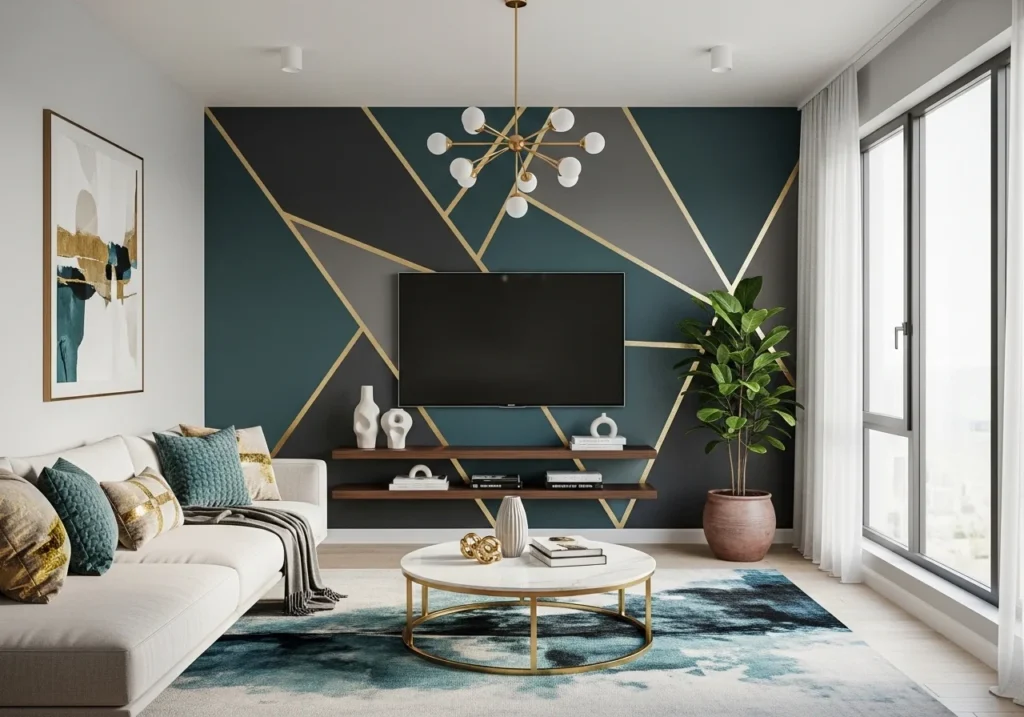
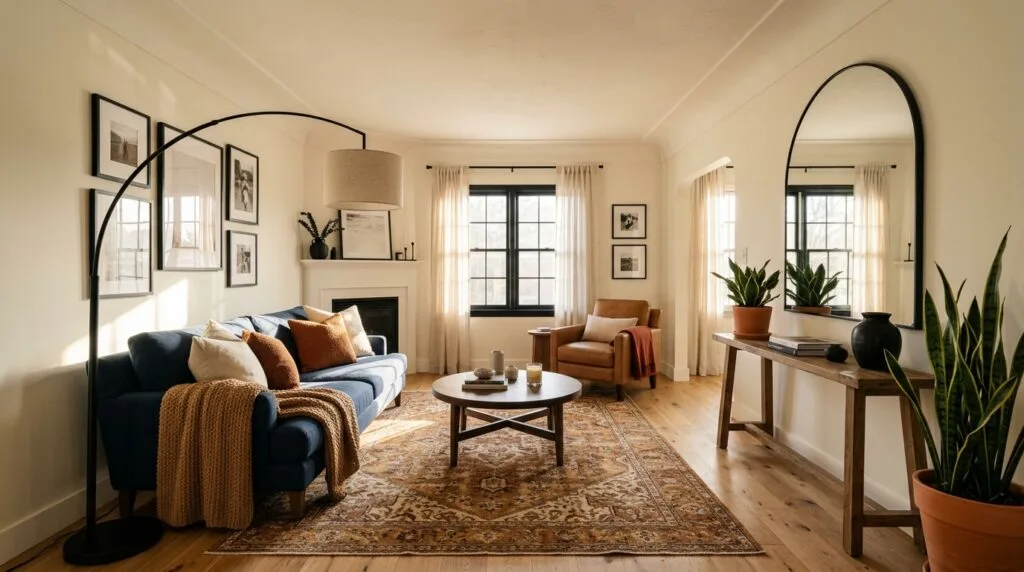
A single solid color painted across all four walls creates unity and calm. This approach works best with neutral shades white, warm beige, light grey, or soft sage. Solid walls let your furniture and decor become the visual stars.
Two-Tone Wall Painting Design
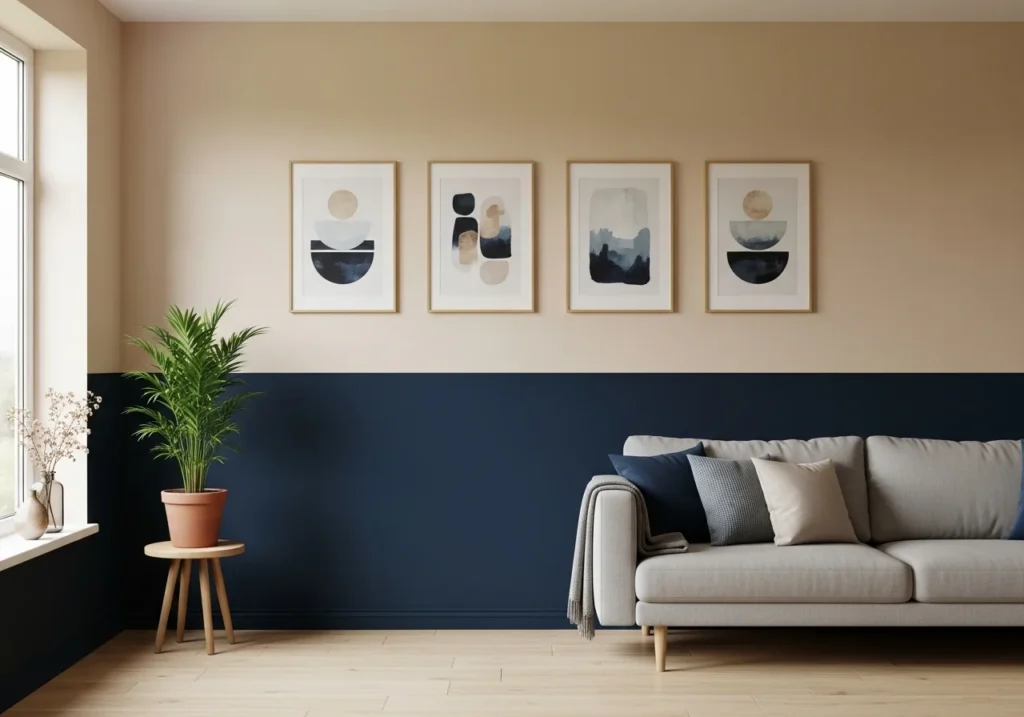
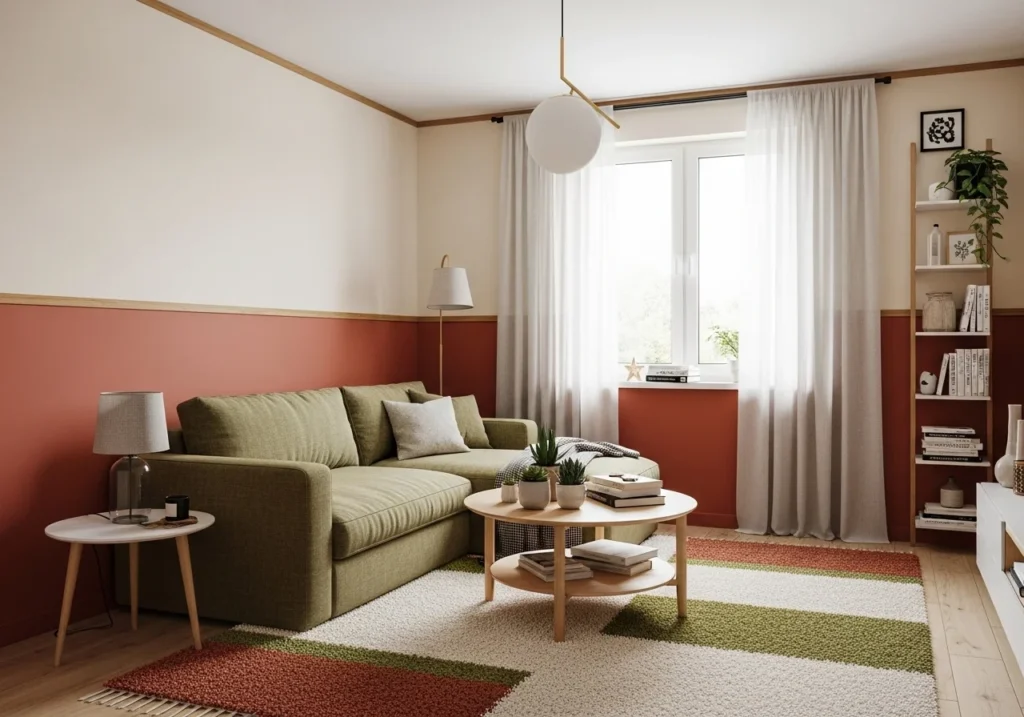
Two-tone walls divide the wall horizontally into two colors. A darker shade sits on the lower half. A lighter tone covers the upper half. This design adds structure and visual height. It suits both modern and classic living rooms wall painting.
Accent Wall Paint
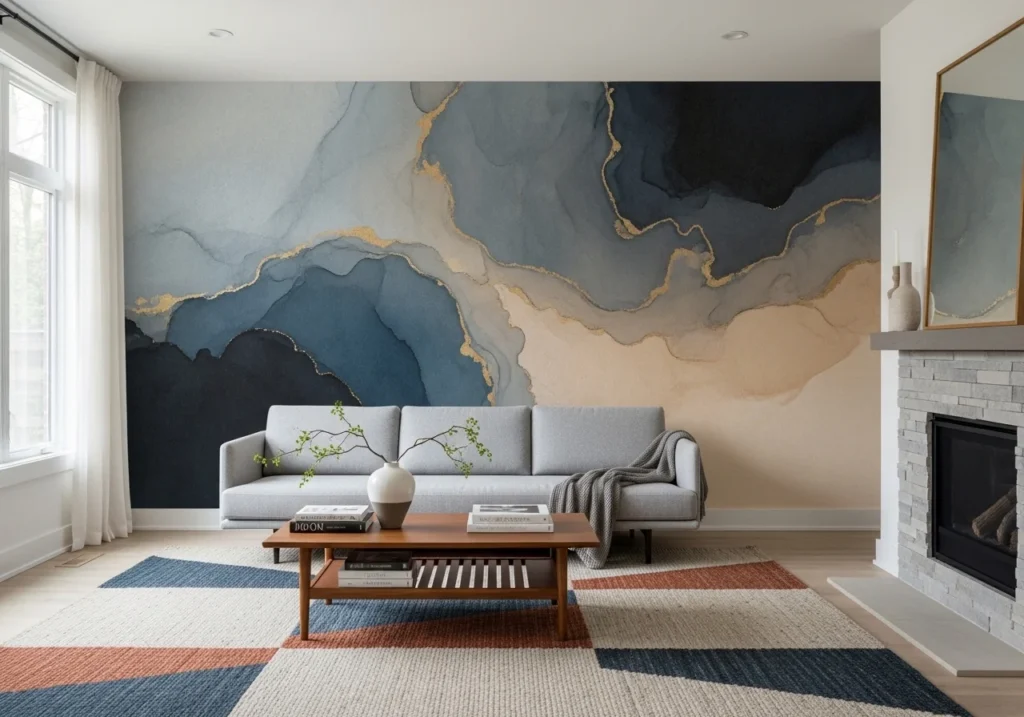
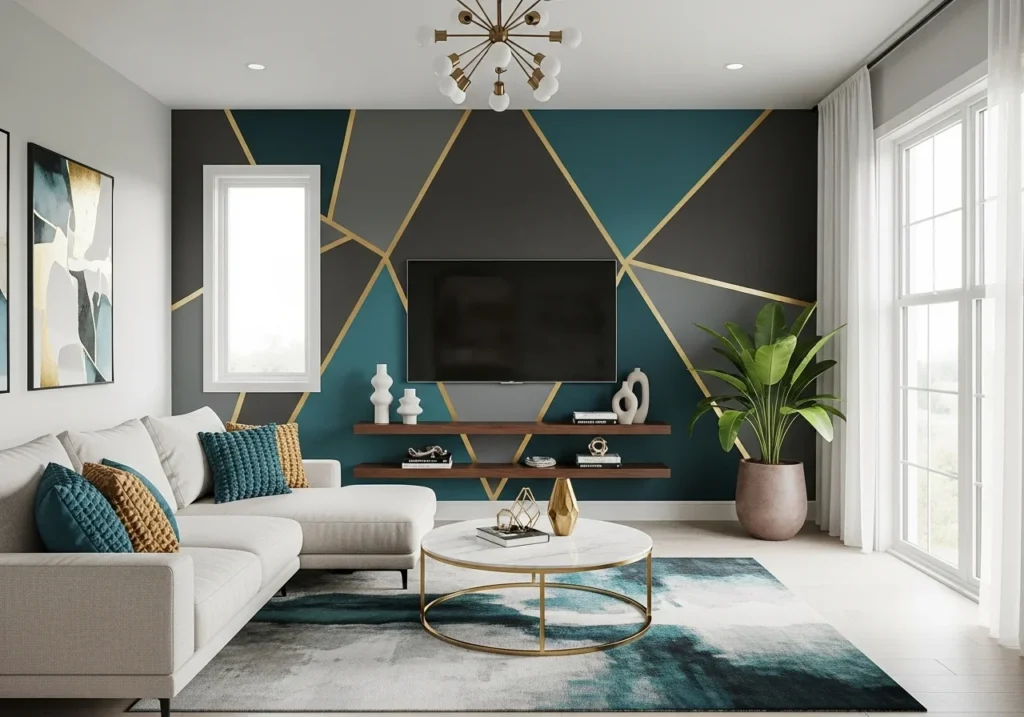
An accent wall uses one wall as a statement piece. Paint it a bolder or deeper shade than the remaining walls. The wall behind your sofa or TV unit works best. This approach adds depth without overwhelming the room.
Geometric Paint Styles
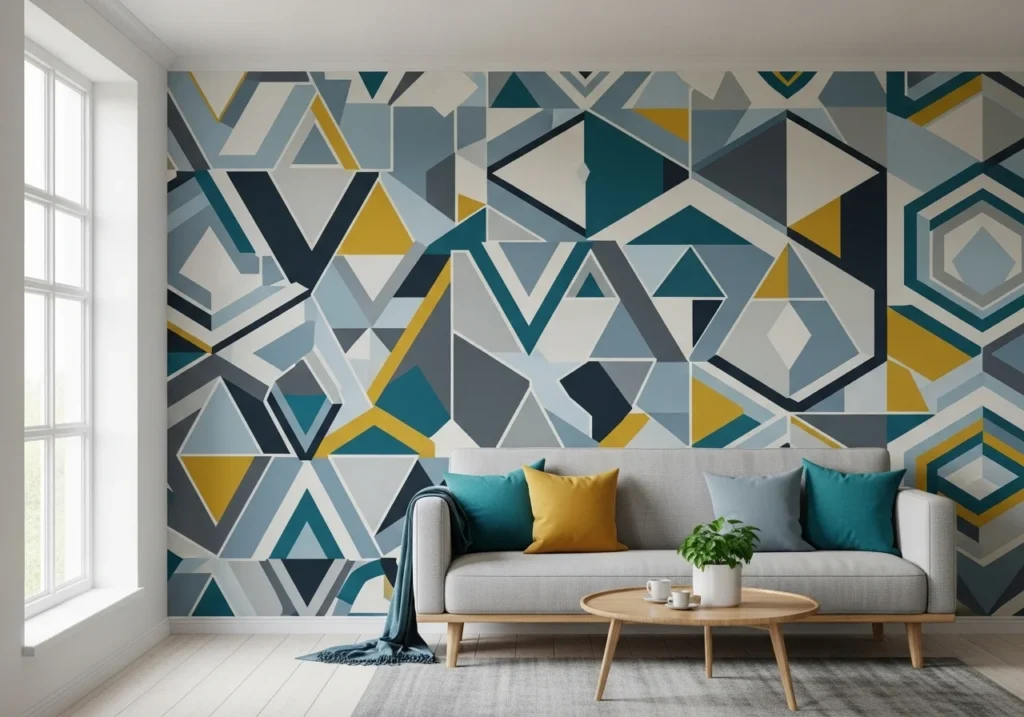
Geometric patterns use painter’s tape to create triangles, hexagons, chevrons, or diamond shapes. This style suits modern and contemporary living rooms. It adds visual energy without requiring wallpaper or tiles.
Modern Wall Painting Ideas for Living Room
Minimal Neutral Shades
Neutral wall colors dominate modern interior design. Shades like warm white, greige, soft taupe, and pale linen create a clean, timeless backdrop. They pair with almost any furniture color and style.
Matte Finish Walls
Matte paint finishes absorb light instead of reflecting it. This creates a soft, sophisticated look. Matte walls hide surface imperfections better than gloss finishes. They suit living rooms where you want a calm, low-contrast environment.
Soft Pastel Colors
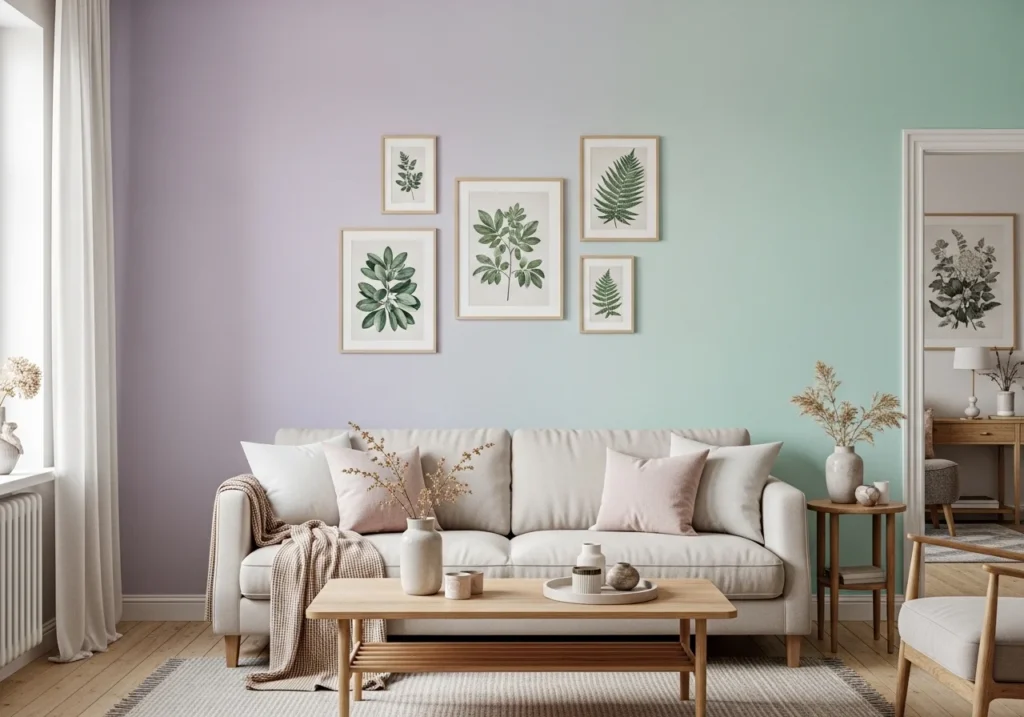
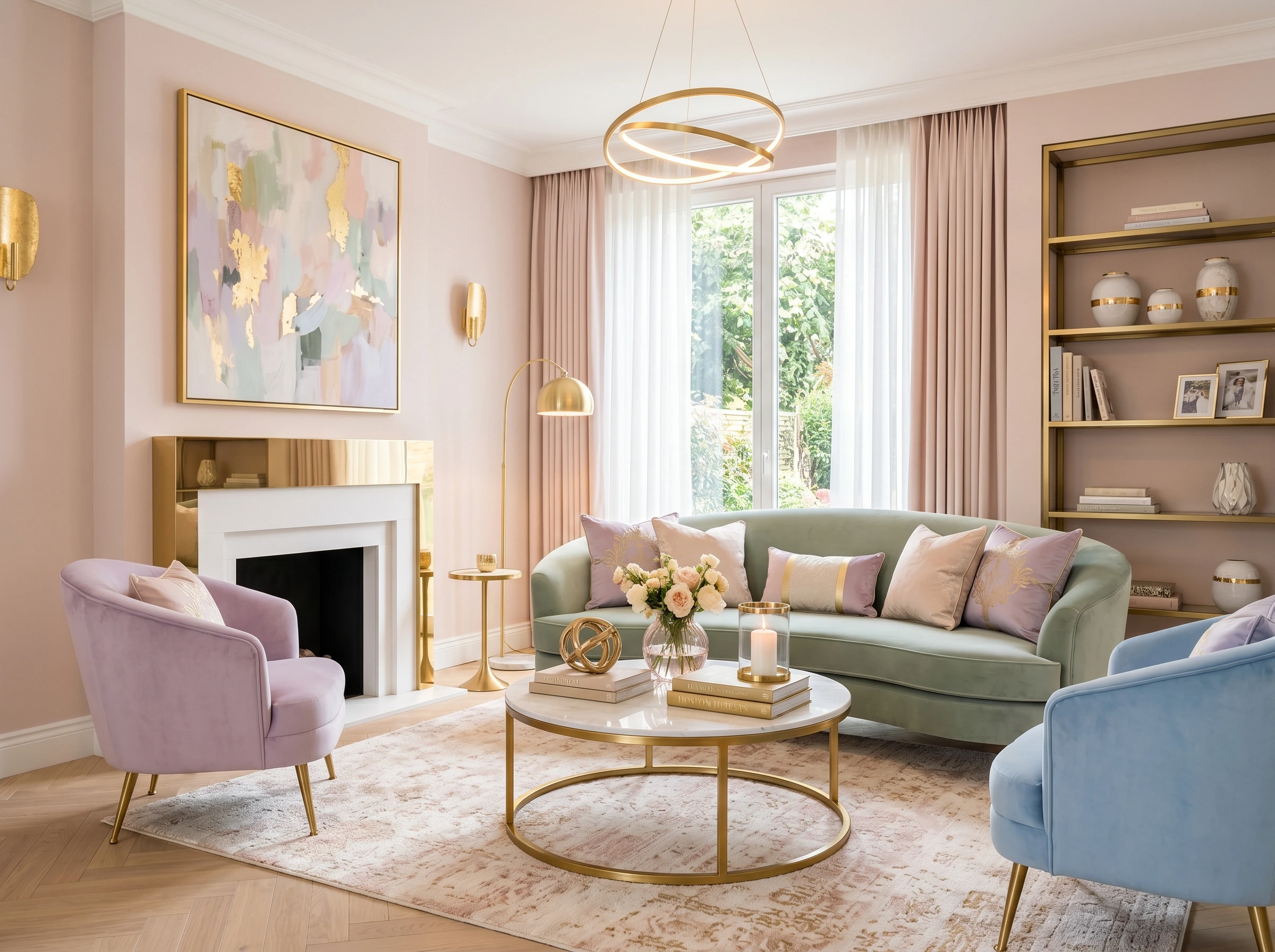
Pastel shades blush pink, powder blue, pale mint, and lavender bring softness into the living room. These colors work well in rooms that receive good natural light. They create an airy, relaxed atmosphere without feeling stark.
Dark Bold Feature Wall
A deep, saturated wall color makes a strong design statement. Forest green, charcoal, navy, and burgundy work powerfully as feature wall paint choices. Pair a dark wall with lighter furniture and warm lighting for balance.
Color Combinations for Living Room Walls
White and Beige This pairing creates a clean, warm, and timeless look. White ceilings with beige walls feel open and inviting. It suits minimalist and Scandinavian-inspired living rooms.
Grey and Blue Soft grey walls with blue accents create a calm, sophisticated atmosphere. This combination works well in both small and large living rooms. It pairs naturally with white trim and wooden furniture.
Black and Gold Black walls with gold fixtures and accessories deliver a bold, luxury aesthetic. Use this combination carefully. Limit black to one wall and balance it with warm lighting and lighter furnishings.
Earth Tone Palette Terracotta, rust, warm brown, and olive create a grounded, natural atmosphere. Earth tones suit bohemian, rustic, and contemporary living rooms. They age beautifully and remain stylish across design cycles.
Wall Painting Ideas for Small Living Rooms
Light Colors for Space Feel
Light colors reflect more light and make walls appear to recede. Soft white, pale cream, and light grey are the most effective shades for making small living rooms feel larger. Avoid dark or saturated tones on all four walls in compact spaces.
Vertical Stripe Design
Vertical stripes draw the eye upward. This creates the visual impression of higher ceilings. Use two similar shades one slightly darker than the other for a subtle, elegant stripe effect.
Soft Contrast Walls
Paint three walls in a light neutral. Paint the fourth wall in a slightly deeper shade of the same color family. This adds dimension without making the room feel closed in. It works better than a dramatically contrasting accent wall in small spaces.
Mirror Wall Effect
Paint one wall in a high-sheen or satin finish while keeping the others matte. The reflective surface bounces light around the room. This creates depth and openness without the visual clutter of an actual mirror installation.
Step-by-Step Guide to Paint Living Room Walls

- Choose the right color. Test paint samples on your actual wall. Observe them in both natural and artificial light before making a final decision.
- Clean the wall surface. Remove dust, grease, and old adhesive residue. Use a damp cloth and mild soap. Let the wall dry completely before proceeding.
- Apply primer. Primer seals the surface and improves paint adhesion. It creates a uniform base that helps your chosen color appear true and even. Skip primer and you risk patchy, uneven results.
- Start painting evenly. Use a roller for large surfaces and a brush for corners and edges. Apply paint in long, smooth strokes. Work from top to bottom.
- Apply a second coat. Allow the first coat to dry fully usually two to four hours. Apply a second coat for depth and uniform coverage. Never apply a second coat over wet paint.
- Let it dry properly. Allow full drying time before moving furniture back or touching the surface. Most latex paints cure fully within 24 to 48 hours.
Tips to Make Your Wall Paint Look Better
- Use good quality paint. Premium paint provides better coverage, richer color, and longer durability. Cheap paint fades faster and requires more coats.
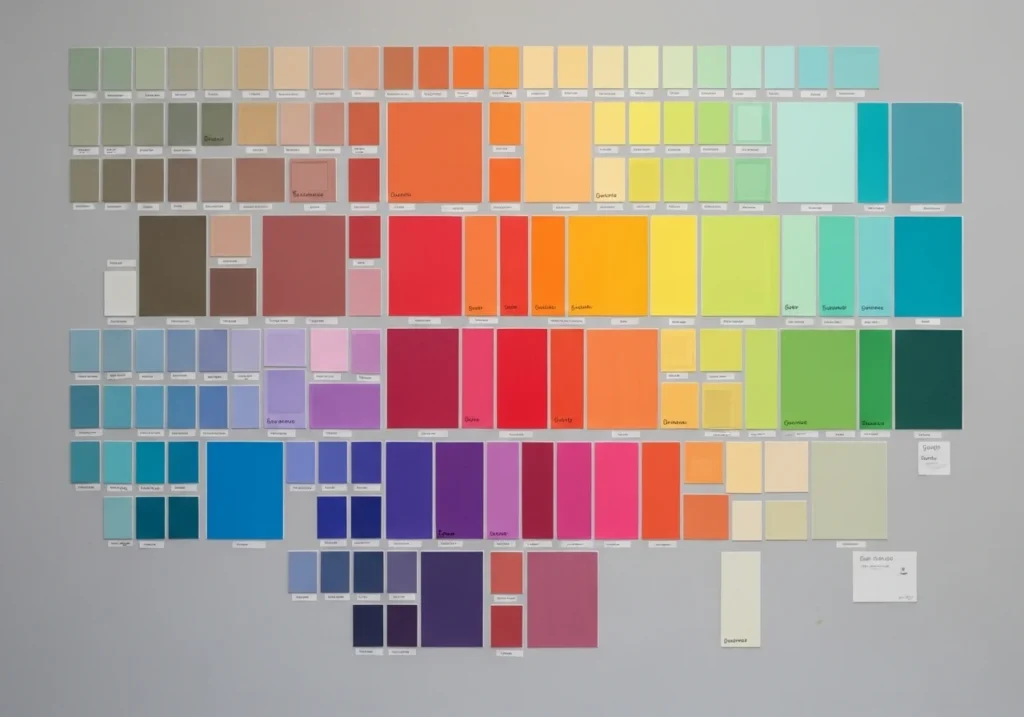
- Test colors before the final choice. Paint a 30 x 30 cm swatch on the wall. Live with it for two to three days. Lighting changes how colors read at different times of day.
- Match paint with furniture. Your wall color should complement not compete with your sofa, rug, and curtains. Pull one color from your existing decor and build your wall palette around it.
- Use proper lighting. Warm bulbs make warm wall tones richer. Cool bulbs enhance grey and blue shades. Plan your lighting before finalizing your paint color.
- Keep finish smooth. Sand any rough patches before painting. Use fine-grit sandpaper after the primer dries. A smooth surface delivers a professional final result.
- Maintain color balance. If your walls are bold, keep furniture neutral. If your furniture is bold, keep walls calm. Balance creates visual harmony across the entire room.
Common Mistakes to Avoid
Choosing the wrong color tone. Undertones matter. A white paint can lean pink, yellow, or green depending on its undertone. Always test on the actual wall before committing.
Skipping primer. Primer is not optional. Walls with old paint, stains, or repairs need primer for even coverage. Skipping it causes patchy results and wastes paint.
Uneven paint application. Rushing paint application creates streaks, roller marks, and uneven coverage. Take your time. Work in sections. Maintain a wet edge to avoid lap marks.
Ignoring lighting effects. A color that looks perfect in the store may look completely different on your wall. Natural light, artificial bulb type, and room orientation all change how paint colors appear.
Conclusion
Wall paint is one of the simplest and most effective ways to refresh a living room. The right color sets the mood, enhances your decor, and makes the space feel intentional.
From soft neutral tones to bold feature walls,living room wall painting ideas exist for every style and budget. Small changes a single accent wall, a matte finish, a fresh neutral coat deliver significant visual impact.
Plan your color carefully. Test before committing. Apply with patience. The result is a living room that feels new, balanced, and entirely yours.
FAQs
1. Which color is best for living room walls?
Warm neutrals like beige, greige, and warm white suit most living rooms. They create a welcoming atmosphere and pair with nearly any furniture style or color.
2. How do I choose wall paint for small spaces?
Use light, cool, or neutral shades. Pale grey, soft white, and light sage reflect light and make compact rooms feel larger. Avoid dark tones on all four walls.
3. Are accent walls still trending?
Yes. Accent walls remain a strong design choice in 2026. Dark green, deep blue, and warm terracotta are the most popular accent wall paint colors this year.
4. What paint finish works best for living rooms?
Matte and eggshell finishes suit living rooms best. Matte hides imperfections. Eggshell offers slight sheen and easy cleaning. Avoid high-gloss finishes on large wall surfaces.
5. How often should I repaint my living room?
Repaint every five to seven years under normal conditions. High-traffic rooms or walls with scuffs and fading may need repainting every three to four years.
6. Can I paint my walls myself?
Yes. With proper preparation, quality tools, and patience, DIY wall painting delivers professional-looking results. Use painter’s tape, a quality roller, and apply two full coats for best coverage.

Related Articles
Explore more topics in this category