7 Living Room Decor Changes That Made It Feel Right
By Aria | Quick Decor Ideas
Our living room sat unfinished for nearly two years after we moved into our house outside Charlotte.
Beige walls that absorbed no personality. A builder-grade ceiling fan humming under cold white light. One north-facing window doing its best against the odds. Even Biscuit our rescue dog who has strong opinions about every rug we’ve ever owned refused to sit on the jute mat I’d bought because it looked good in a photo.
I tried everything I’d pinned. Nothing worked.
By 2023, I started understanding why.
Most living room decor advice online is written by people who have never actually lived through their own mistakes. It’s styled for a magazine shoot, not for a Tuesday night at 9 p.m. when the kid is finally asleep and you’re trying to exhale on the sofa in a room that still doesn’t feel like yours.
Everything in this post is something I tested in our own home. A few changes cost under $30. None of them require a renovation budget. And every single one made a visible, immediate difference in a room that had stumped me for two full years.

1. Wall Color: The First Thing I Got Wrong, and the Fix That Actually Worked
Paint was my first big mistake and the most expensive one.
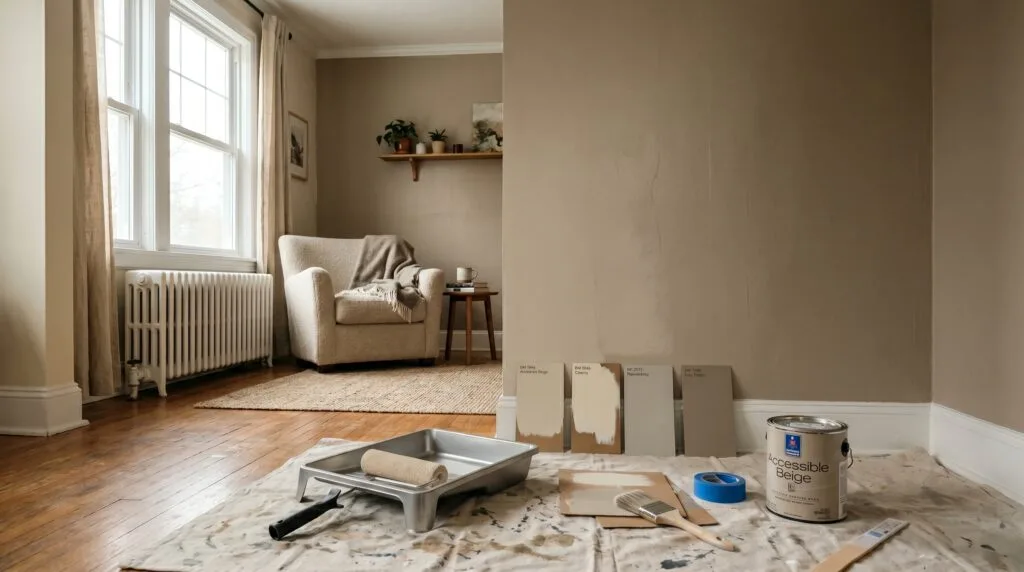
I pulled a Sherwin-Williams Repose Gray swatch off the rack at the hardware store, looked at it under the fluorescent lights overhead, and decided it was the one. I painted the entire room in a weekend. By Monday morning, in our north-facing light, it read almost lavender.
I repainted within six weeks.
The second color was Sherwin Williams Accessible Beige. Warmer. More forgiving. It shifts through the day in a way that feels almost intentional creamy at 6 a.m., soft taupe by early afternoon, golden when the sun catches the room at an angle late in the day.
What I’d do differently: Don’t trust swatches under store lighting in living room, and don’t trust your screen. Buy the $5 sample pot. Paint a foot-square patch on at least two walls — one near the window, one away from it. Watch it through a full day, morning to evening. North-facing rooms pull cool undertones colder. South-facing rooms warm everything up. The same paint can read like two different colors in the same room depending on where you’re standing.
That one habit has saved me at least one full repaint since.
2. Layered Lighting: The Single Biggest Change in Our Entire House
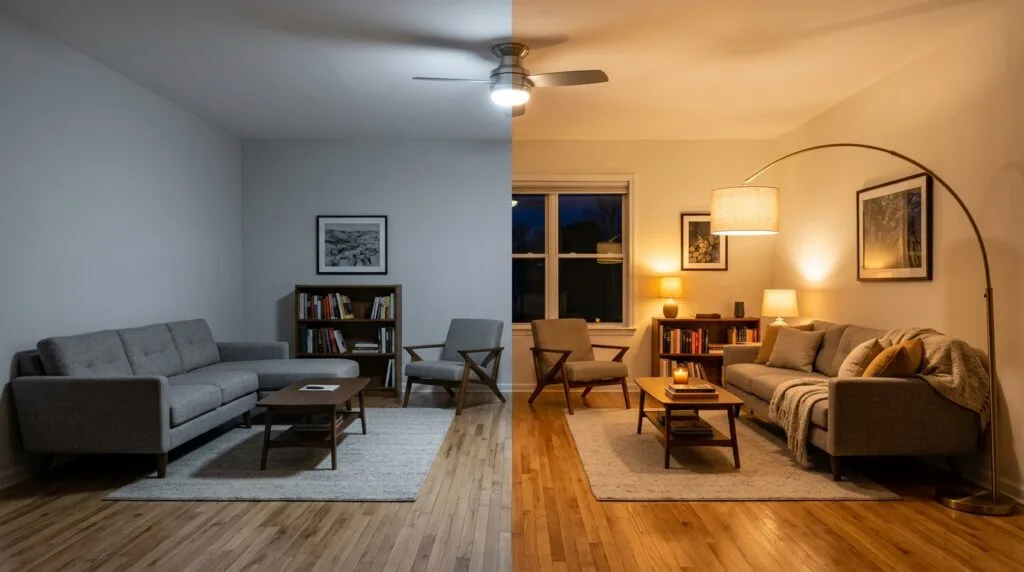
I lived under that builder ceiling fan for almost two years. One flat, cold blast of overhead light that made the room feel like a break room at an office building.
When I finally changed the lighting, the living room transformed in a single evening.
Here’s exactly what I did:
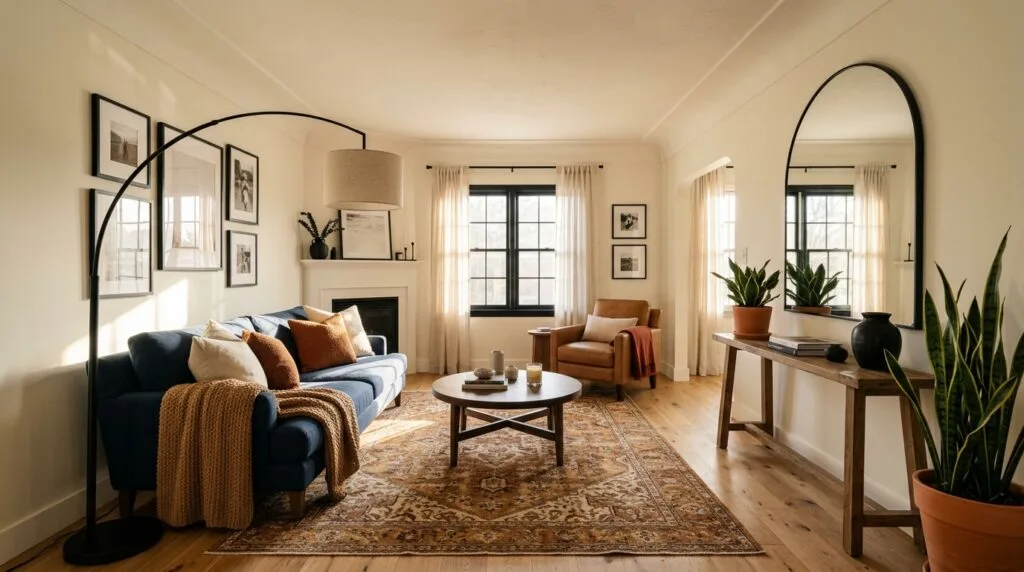
- A 60-inch arc floor lamp from Target around $80
- Two table lamps from HomeGoods $34 each
- All bulbs swapped to 2700K warm white
- Every source on its own switch
That’s it. Three light sources instead of one, all warm, all at different heights.
The difference was immediate and almost embarrassing I’d spent months rearranging furniture and trying new textiles when the actual problem was the light. Shadows appeared. The room had warmth and depth for the first time. We now turn the overhead ceiling fan light on maybe twice a week.
The honest math: Switching to 2700K bulbs across our whole house cost me about $24. It did more for how our home feels than any furniture purchase I’ve made.
If you’re only going to do one thing on this list, do the lighting first. Always lighting first.
3. Cushion Covers: The $12 Fix That Made Our Sofa Look Designed
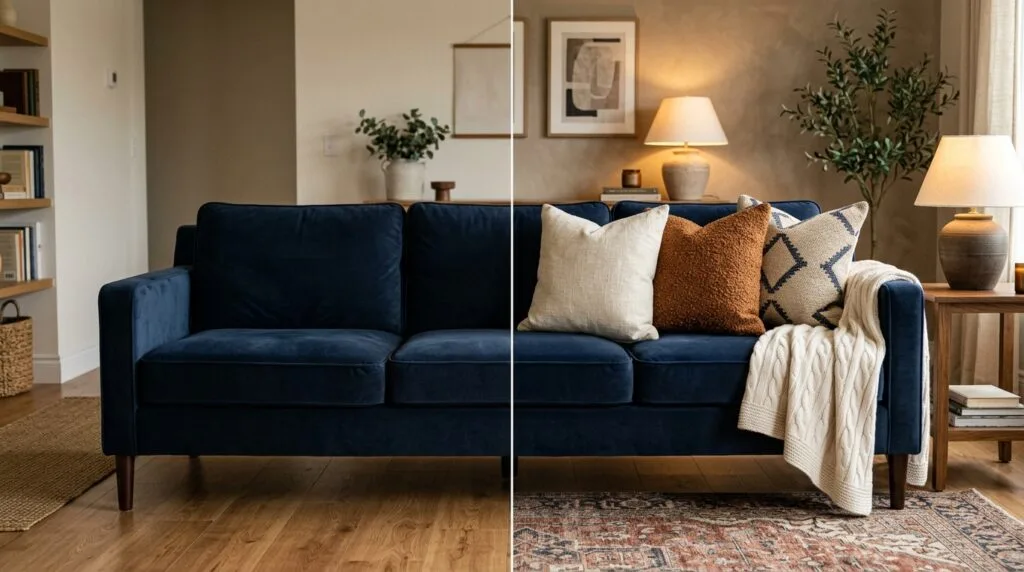
I have a navy sofa from Article bought before I understood anything about layering or contrast. It came with matching navy cushions. The whole setup looked flat and a little depressing, like furniture bought to simply fill a room.
The fix cost $48 total.
Four pillow covers from HomeGoods:
- Two cream linen
- One rust-colored boucle
- One small geometric pattern in oatmeal and black
The sofa looked like something a designer had intentionally styled. Same sofa. Same room. Different cushions.
The principle that makes this work: Texture does the visual heavy lifting, not color. Velvet, boucle, linen, and heavy-weave cotton all read more expensive than they cost. Mix at least three different textures on any sofa. Keep the palette tight two neutrals and one warm accent is usually enough.
A few other low cost moves in the same spirit:
- A thrifted brass tray on the coffee table
- Swapping plastic switch plates for brushed nickel ones $4 each at Home Depot
- A small glass vase with dried stems from the craft store
None of these required a real budget. They just required paying attention to materials.
4. Rug Layering: How I Finally Got Texture Right
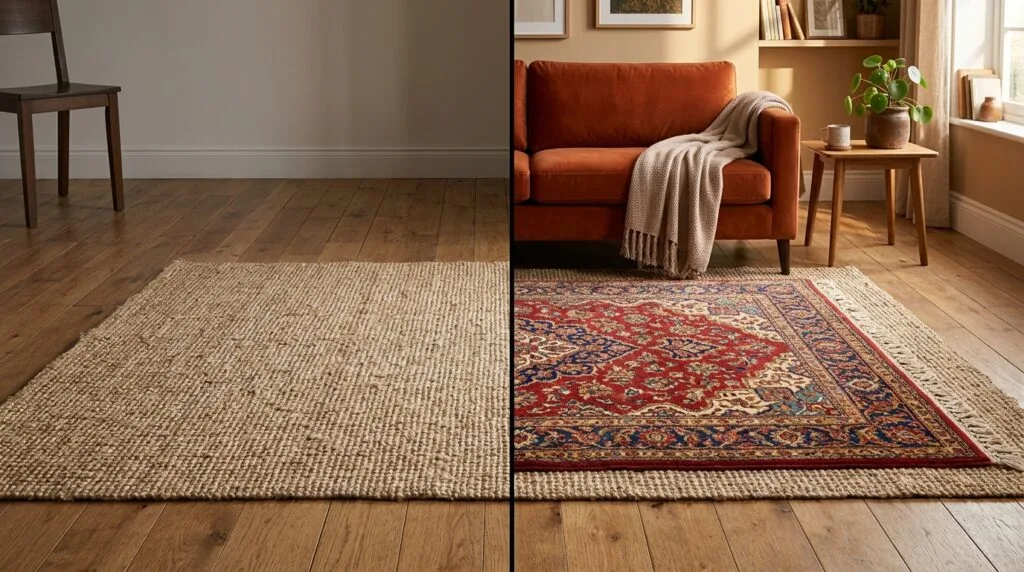
For almost two years, I had one rug: a flat weave jute that photographed beautifully and felt like sandpaper underfoot. Our kid refused to sit on it. Biscuit had strong feelings about it. I kept it because it looked good in photos I took of the room.
That was the wrong reason.
The solution was layering, not replacing.
I kept the jute as the base and added a smaller vintage style rug from Wayfair on top around $135 during a sale. The result was immediate: warmth underfoot, texture at two levels, and a layered look that finally gave the room the dimension I’d been chasing with furniture and accessories for two years.
The general rule I follow now: Buy your largest pieces sofa, rug before anything else. Don’t make my mistake of buying the rug first. Colors and scales clash when you work backwards.
5. The Mirror Trick That Made a 12×14 Room Feel Like It Had Space to Breathe
Our living room is 12 by 14 feet. Not small enough to feel cramped, but not generous either. The wall opposite our main window stayed dim and flat for two full years. No amount of art or shelving helped.
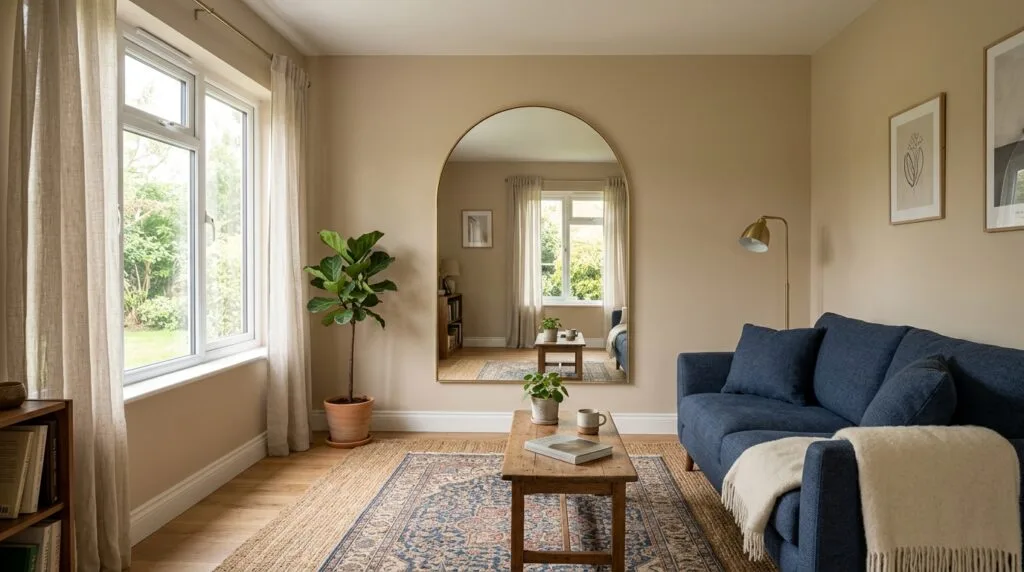
I hung a 36-inch arched mirror on that wall purchased at HomeGoods for $89.
The room immediately felt larger and brighter. Not because the mirror is decorative, though it is, but because it’s placed directly across from the window. Real daylight bounces back into the room and visually doubles the depth of the space.
How to do this right:
- Place the mirror across from your main natural light source not above the sofa, not in a hallway
- Go large one 36 inch mirror does more than three small ones arranged in a gallery
- Choose a simple frame: plain wood, thin black, or matte brass. Anything ornate competes with the rest of the room
This is one of those changes that looks expensive and feels significant but costs less than a throw blanket from a boutique.
6. Plants: The Cheap Corner Fix (and the Lesson I Learned the Hard Way)
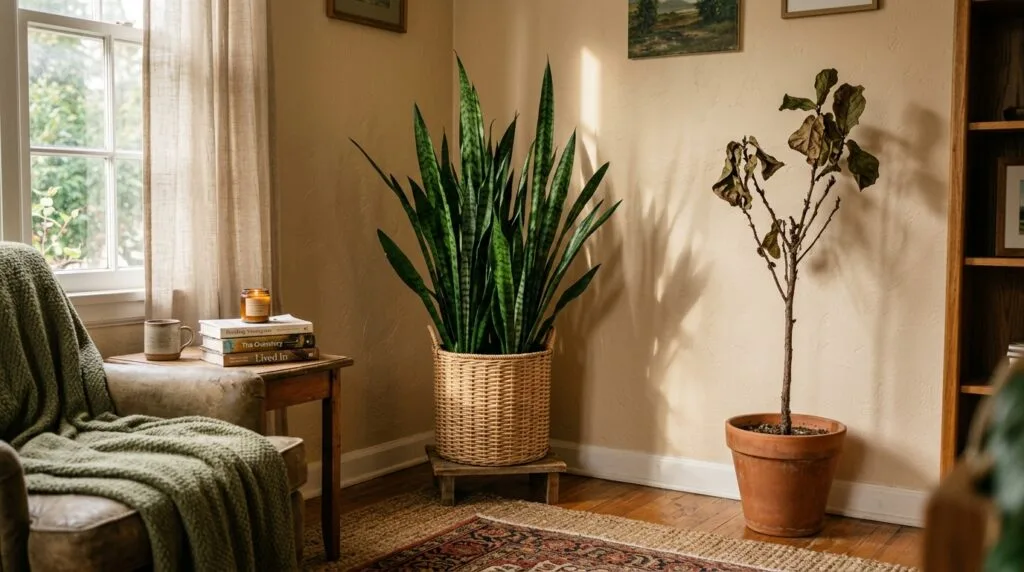
I bought a fiddle leaf fig from our local Lowe’s for $42. It lasted four months. Our north-facing window doesn’t give enough light, and I didn’t know that when I bought it.
I replaced it with a snake plant from Home Depot for $28. It has now survived two Charlotte summers and one ice storm. It asks for almost nothing.
What actually works in low-light rooms:
- Snake plant genuinely the most forgiving houseplant I’ve ever owned. Handles inconsistent watering, low light, and the dry winter air from our heat pump.
- Pothos a close second. Trails beautifully from a shelf, grows fast, and forgives neglect.
One note: keep both away from heating and air vents. The forced air dries them out faster than low light ever will. During Charlotte’s spring pollen season, I wipe the leaves every couple of weeks or they start to look dusty and tired.
A large plant in a corner fills space cheaply and adds organic texture that no manufactured decor item can replicate. I learned this after spending considerably more on a slim console table that did nothing for the room.
7. A Three Color Palette That Made Every Decision Easier
The thing that finally pulled our living room together wasn’t a purchase. It was a decision.
Three colors. That’s it.
- Warm white walls and base
- Caramel and rust accents, cushions, throws, one or two art prints
- Soft black anchors: lamp bases, frames, a single piece of hardware
Every cushion, every rug, every candle, every piece of art we’ve brought in since making that decision lives somewhere in that family. Shopping got easier. The room stopped feeling random. Decor decisions that used to take me three weeks of second-guessing now take about ten minutes.
What’s working in living rooms right now in 2026: Soft mocha and caramel tones are everywhere. Sage green is still strong. Warm terracotta has held up far longer than the trend forecasters predicted. The big departure has been from the cool gray-and-white aesthetic that dominated the late 2010s. Warm neutrals with one grounding dark color is the formula most well-styled rooms are following — and for good reason. It’s forgiving, timeless, and easy to layer into.
The Four Mistakes I’d Skip If I Started Over
I bought the rug before the sofa. The colors clashed for a year before I gave up and rolled it into the garage. Always buy large anchor pieces first, then layer accessories down from there.
I trusted online paint swatches. Two of my early paint choices looked nothing like the color on my screen. Sample pots are non-negotiable now always, without exception.
I waited too long on the lighting. Layered light should have been the first change I made, not something I got to after two years of trying everything else. If you’re reading this before you’ve started: do the lighting first.
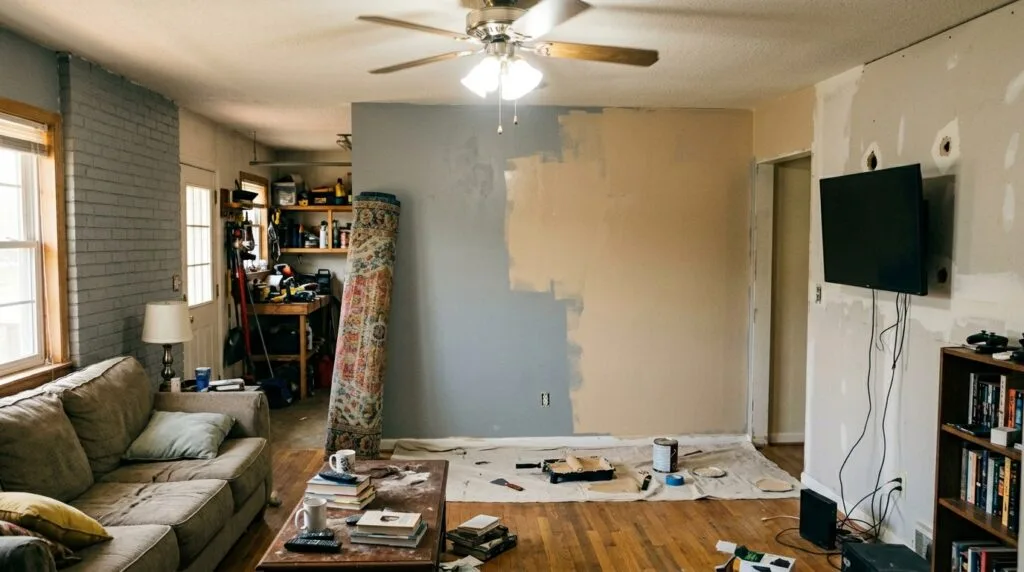
I ignored Mark’s input on the TV wall. He was right about the mounting height. I was wrong. I’ve patched and repainted around four anchor holes since then. One practical note from that experience: if you’re mounting anything heavy on drywall, find the studs and use the right hardware. Kids and dogs don’t negotiate with improperly mounted televisions.
The Honest Truth About How This Took Three Years
This living room didn’t come together in a weekend, and it won’t for most people either.
It took three years of small adjustments, one real mistake at a time. The paint. The rug. The lighting I ignored for too long. The cushions I finally changed on a Tuesday afternoon when I’d had enough.
The point was never to copy a room from a blog post including this one. The point is to pay attention to what actually bothers you in your own space, and chip away at it slowly, with intention.
If you’re at the beginning of that process, save this post. Come back to whichever section is relevant when you’re standing in your living room at 7 p.m. wondering why something still isn’t working.
And if you’ve already made one of these changes drop a comment and tell me which one moved the needle most. I genuinely want to know.
Aria writes about real homes, real budgets, and real life from her house outside Charlotte, NC. Read more about her approach at quickdecorideas.com/meet-aria.

Related Articles
Explore more topics in this category