20 Creative Laundry Room Design Ideas for a Stylish Home
Does your current washing area feel like a cluttered mess that creates daily stress and slows down your routine? Many homeowners face this problem when they do not organize their laundry room properly, and it leads to wasted time and frustration. However, you can fix this issue without starting a full renovation.
You can transform even a small utility corner into a highly efficient and stylish space by using smart design strategies. You can improve storage, adjust layout, and increase functionality to make daily chores faster and easier. These simple changes also improve comfort and reduce unnecessary effort.
You can also increase the value of your home while you make your laundry tasks more organized and enjoyable. This guide shows you practical ideas that help you design a clean, modern, and fully functional laundry space.
1. The Evolution of the Laundry Room
To appreciate modern design, we must look at where it started. Historically, washing clothes was a manual, outdoor chore. People used washboards and rivers. In the early 20th century, the first electric machines moved this task indoors, but usually to damp basements.
Today, the laundry room has moved to the main floors of the home. It is no longer a hidden “dungeon.” It is now a high-tech center of home management. Modern homeowners treat this space with the same design importance as a kitchen or master bathroom. Understanding this shift helps you see the value of investing in high-quality surfaces and smart layouts.
2. The Role of a Functional Utility Space
The design of your washing area dictates household efficiency. You spend hours every week cleaning clothes. Therefore, the atmosphere affects your productivity. A well-organized laundry room reduces physical strain. It also prevents clutter from spreading to other living areas.
Integrating smart cabinetry ensures the workspace remains stylish. Much like planning a Modern home decor, prioritizing flow is essential. A functional space must also account for ergonomic height. Placing appliances at a comfortable level prevents back strain during housework.
3. Choosing Durable Surfaces and Countertops
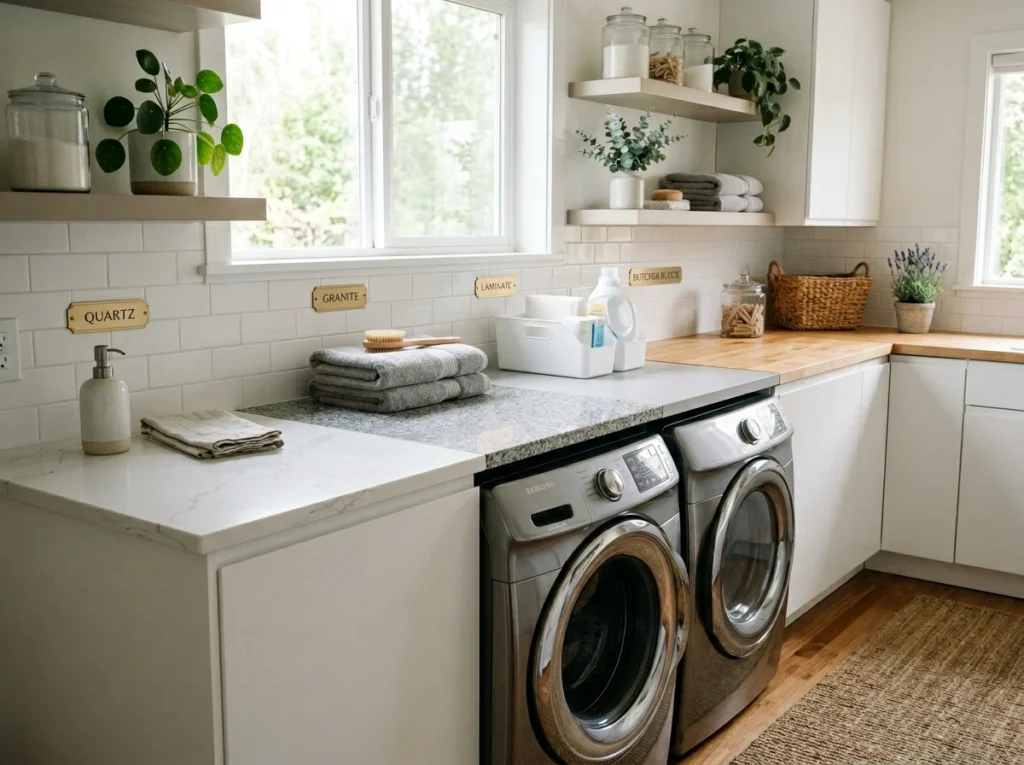
Selecting the right materials for your counters is a crucial step since this area faces constant moisture and spills. A high-quality laundry room deserves premium surfaces that can withstand heavy use and various harsh cleaning chemicals over time. Quartz remains the top choice for high-end designs because it is non-porous and resists staining from strong detergents.
Granite offers incredible heat resistance if you do a lot of steaming, but you must seal it to stay waterproof. On the other hand, Laminate surfaces provide decent protection if you are working on a tighter budget for your home. For a farmhouse feel, Butcher Block wood counters add incredible warmth, though they require regular oiling in a laundry room.
4. Physics of Laundry Lighting
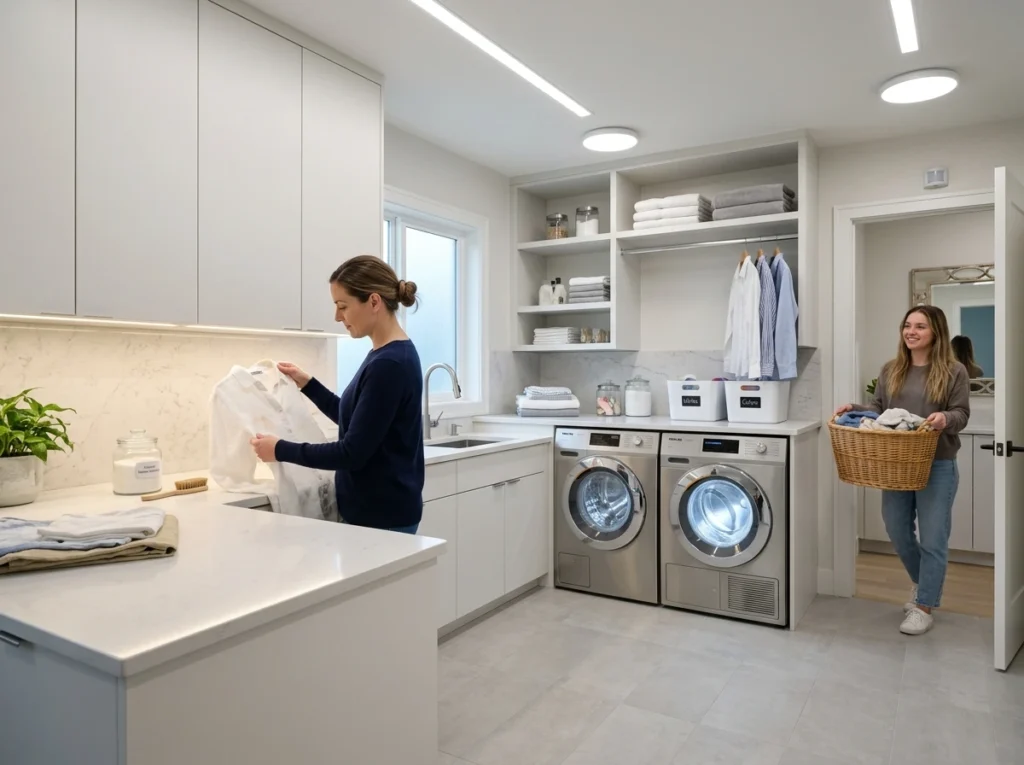
Lighting is not just about brightness; it is about color accuracy. When you are treating a stain, you need to see the fabric’s true color. This is why “Color Rendering Index” (CRI) matters. In a laundry room, you should look for LED bulbs with a CRI of 90 or higher. Standard bulbs often make yellow stains look invisible. Task lighting under cabinets should be positioned at the front edge. This prevents your own body from casting a shadow over your work area. For a luxury touch, install motion-sensor lights. They turn on automatically when you walk in with a heavy basket of clothes.
5. Advanced Plumbing and Drainage Solutions
A great utility space starts with what you can’t see. Proper plumbing prevents costly leaks and water damage. You must ensure that your floor drain is at the lowest point of the room. This protects your home during an appliance failure.
Wall-mounted valves allow for easy water shut-off. This is a critical safety feature for every laundry room. Consider installing a “Smitty Pan” under your washer. It catches small leaks before they soak into your subfloor. Use high-quality braided stainless steel hoses instead of rubber. They last longer and resist high pressure much better.
6. Detergent Chemistry and Safe Storage
Storing laundry chemicals requires more than just a shelf. Detergents and bleach are corrosive. If they leak on wooden cabinets, they cause permanent damage.
Use plastic liners inside your cabinets to catch drips. Store pods in airtight glass containers to prevent them from absorbing moisture and sticking together. Always keep bleach on a separate shelf from ammonia-based cleaners. Mixing these two creates toxic gas. A professional laundry room design prioritizes chemical safety as much as aesthetic beauty.
7. Small Space Design Ideas
You can create a stylish and functional setup even in a compact area when you apply smart design strategies. Small spaces require careful planning, but the right layout can maximize both efficiency and comfort. By focusing on vertical storage and flexible elements, you can make the most of every inch without creating clutter.
Maximizing Square Footage
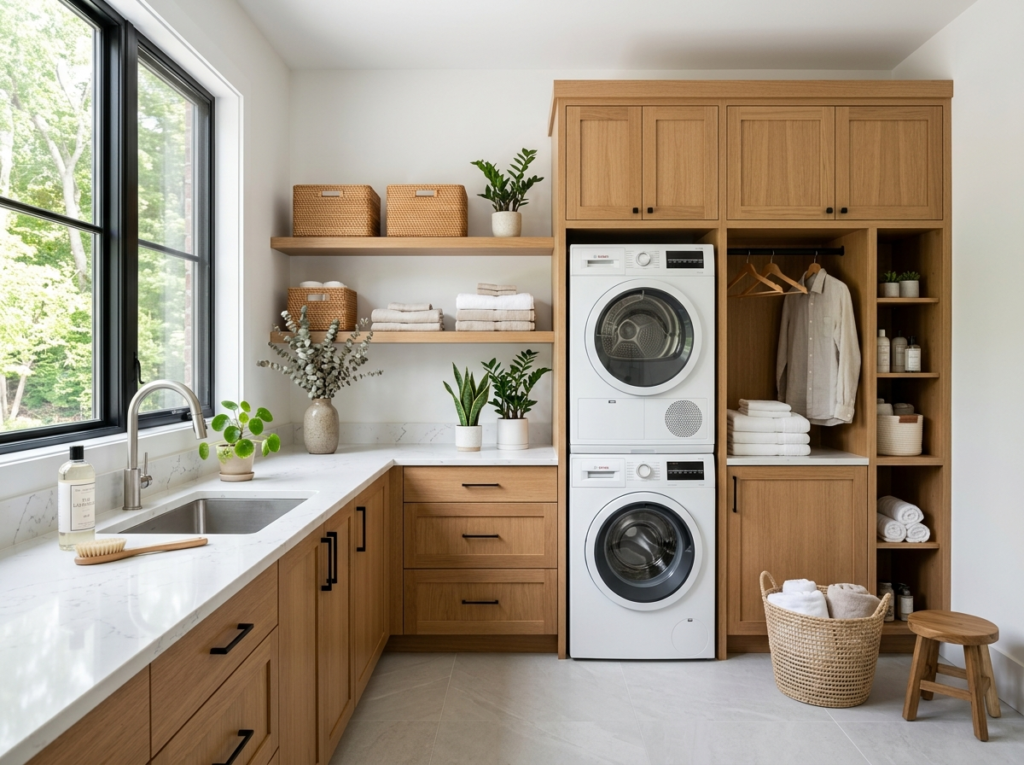
- Vertical Stacking: This setup saves up to 50% of floor space and keeps your layout clean and highly efficient.
- Retractable Tables: These provide a folding surface when needed and fold away easily to save valuable space.
- Sliding Barn Doors: These prevent door swing issues and improve movement in narrow areas.
- Over-the-Door Organizers: These help you use unused door space to store small laundry essentials neatly.
Understanding Ventilation and Airflow
Proper ventilation is the most overlooked aspect of laundry room design. High-heat dryers produce massive amounts of lint and moisture. If this air stays trapped, it ruins your walls and promotes mold growth.
Your dryer vent should be as short and straight as possible. Every turn in the duct slows down airflow. Use rigid metal ducting instead of flexible plastic hoses. Metal is safer because it doesn’t catch fire as easily. If your room doesn’t have a window, install a high-CFM exhaust fan to keep the air fresh.
8. Seasonal Fabric Management
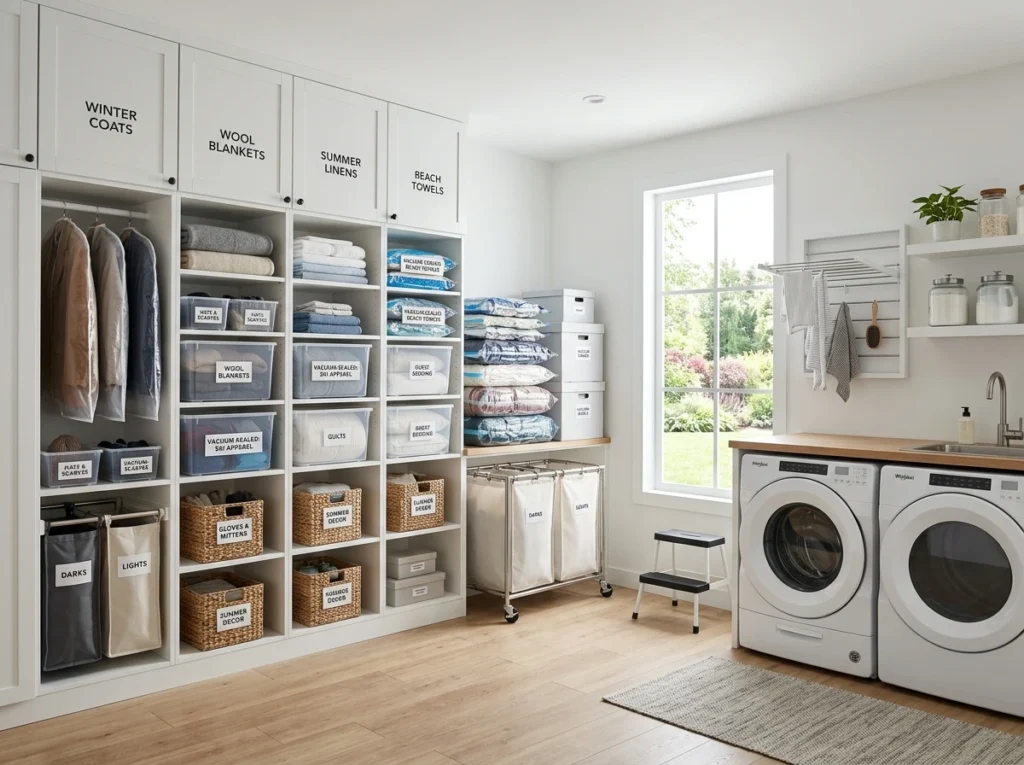
A large laundry room should also act as a storage hub for seasonal items. During winter, you need space for heavy coats and wool blankets. In summer, you need to store delicate linens and beach towels.
Designate the highest cabinets for “off-season” storage. Use vacuum-sealed bags to save 75% of the space. Label each bin clearly so you don’t have to open every box to find your winter scarf. Integrating this into your utility room keeps the rest of your house organized and clutter-free.
9. Modern Design Trends
Modern aesthetics are shifting away from clinical white. Designers now prefer warmer, personalized environments. They treat the utility area with artistic respect. Mixing textures creates a contemporary vibe.
Aesthetic Shifts to Watch
- Hidden Appliances: You can conceal machines behind custom panels to create a clean, seamless, and minimalist look in your space.
- Patterned Tiles: Bold floor tiles add personality and visual interest while making the space feel more stylish and unique.
- Mixed Metals: You can combine matte black hardware with brass accents to create a balanced and sophisticated modern design.
- Mood Lighting: Replace harsh fluorescent lights with warm LED lighting to create a softer, more comfortable, and inviting atmosphere.
10. Impact on Real Estate Value
Does a renovated laundry room actually pay off? According to real estate experts, yes. Buyers today look for “turn-key” homes. A beautiful utility space suggests that the owner has maintained the entire house well.
A functional second-floor laundry can increase a home’s value by 1% to 3%. It is one of the top features requested by millennial buyers. Even if you aren’t selling now, a professional design ensures your home stays competitive in the future market.
11. Color Psychology in Utility Spaces
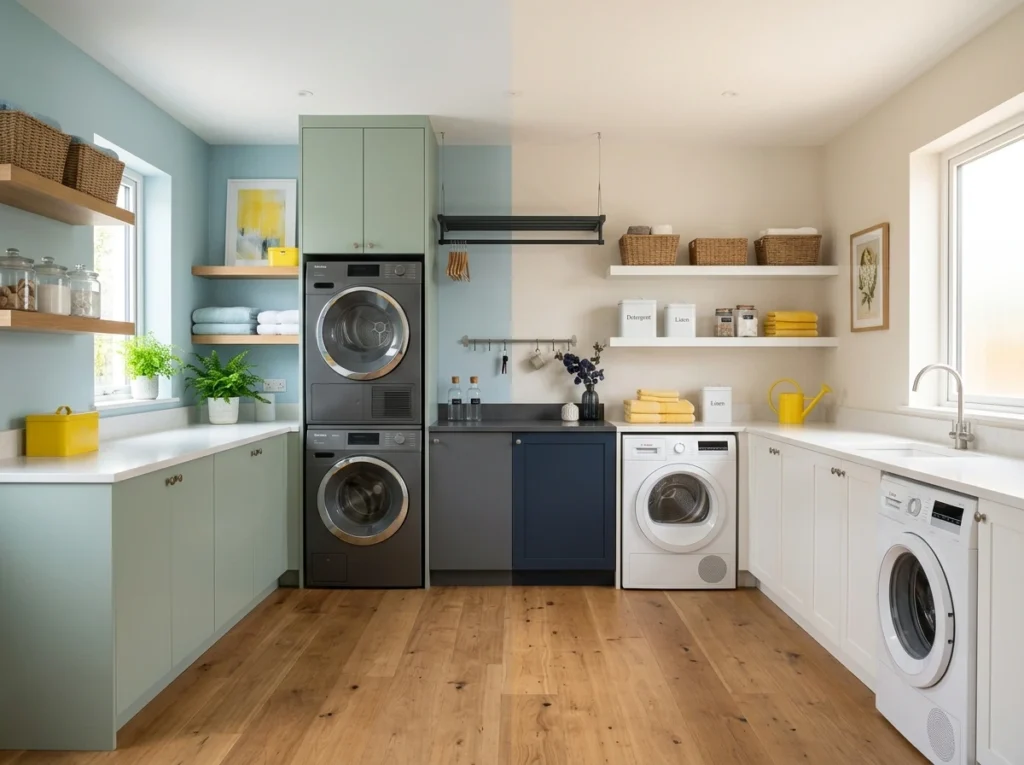
Colors impact your mood while working. Soft blues and greens create a calm environment. This is helpful during a busy laundry day. Navy blue or charcoal grey adds a sense of luxury and depth.
If your laundry room lacks natural light, stick to warm whites or light beige. These colors reflect artificial light and make the room feel larger. Bright yellow can add energy, but use it sparingly as an accent color. Neutral tones ensure that your design stays timeless.
12. Appliance Buying Guide
Choosing the right machines involves more than picking a brand. You need technical specifications that fit your family. For large families, look for a drum capacity of 5.0 cubic feet. This handles heavy loads like comforters.
Pay attention to the RPM (Revolutions Per Minute) speed. Higher speeds extract more water during the spin cycle. This cuts down on drying time. Furthermore, consider Inverter Motors. They operate quietly and have fewer moving parts. This is ideal if your washing zone is near a bedroom.
13. Noise Reduction and Vibration Control
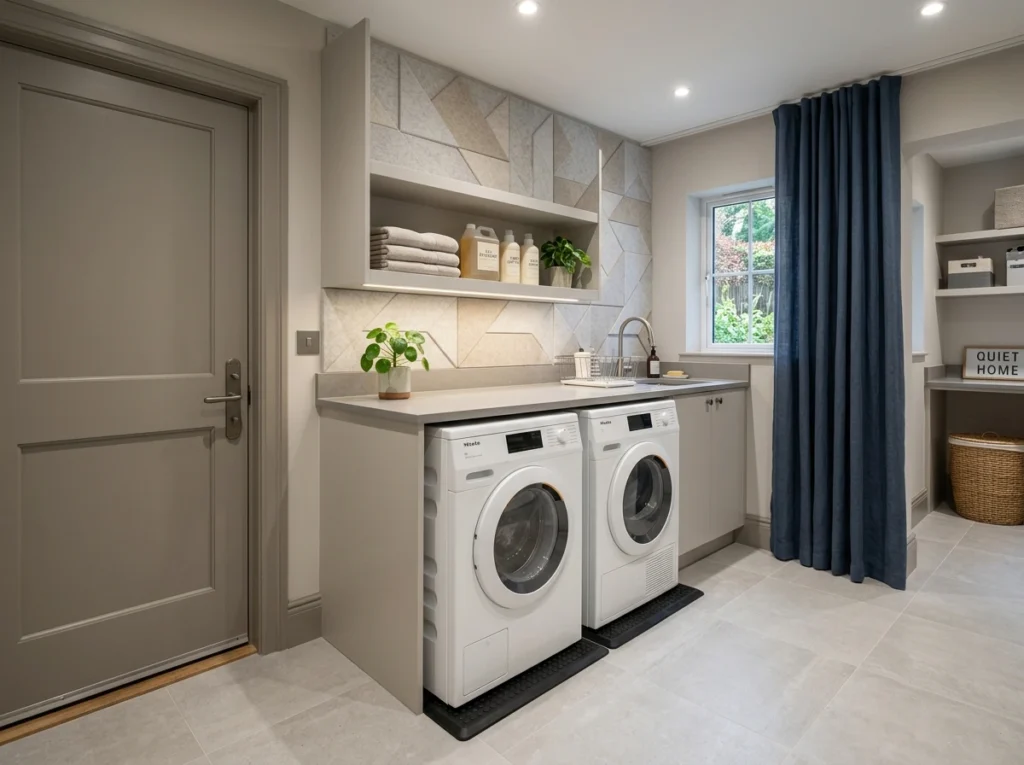
Modern washers can be loud during high-speed spin cycles. If your laundry room is near a living area, noise control is vital. Start by using anti-vibration pads under each foot of the machine. These rubber pads absorb the shock and stop the machine from “walking” across the floor.
Consider adding soundproofing insulation inside your walls during a renovation. Solid-core doors block more sound than hollow-core ones. You can also hang thick curtains or acoustic panels to dampen echoes. A quiet room makes the entire house feel more peaceful.
14. Fabric Care and Sorting Stations
A professional laundry room includes a dedicated space for fabric care. This prevents damage to expensive clothing. Create three separate zones for sorting: whites, darks, and delicates.
Install a built-in “Stain Station” with a small sink and a scrub brush. Keep common stain removers like vinegar, baking soda, and hydrogen peroxide nearby. Having these tools ready saves your clothes from permanent damage. Use a garment steamer for quick touch-ups instead of setting up a full ironing board every time.
15. Eco-Friendly Laundry Strategies
Sustainable living starts with small changes in your utility zone. Modern machines offer “Eco” modes that use 30% less water. This lowers your monthly bills. It also protects the environment.
Choose concentrated detergents to reduce plastic waste. Install a micro-plastic filter on your washer’s discharge line. This prevents tiny fibers from entering our oceans. Consider an indoor drying rack instead of using the dryer for every load. This saves massive amounts of electricity over a year.
16. Innovative Storage Ideas
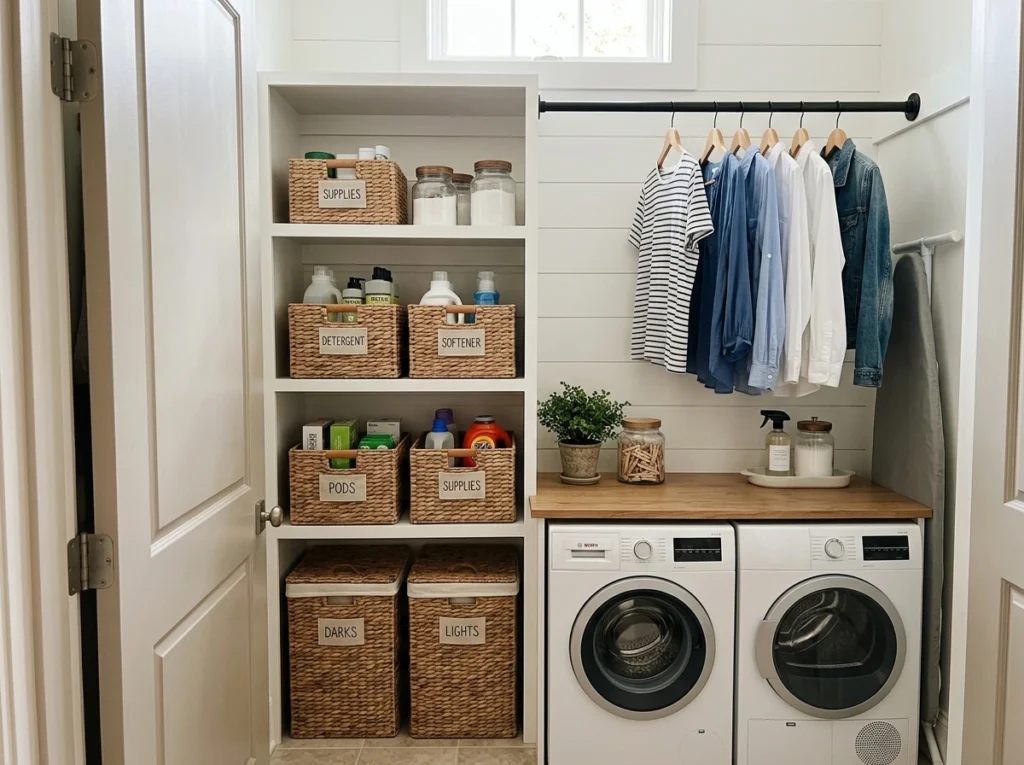
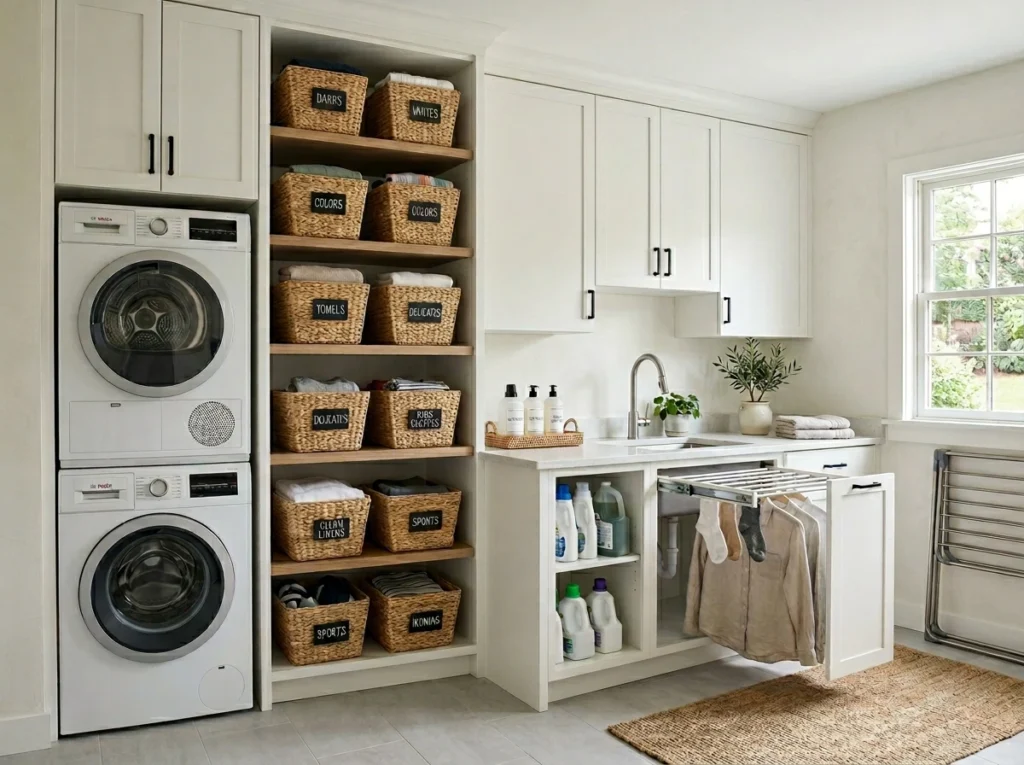
Storage is the backbone of an organized home. Categorizing every item ensures a clutter-free environment. Using labeled baskets helps the whole family maintain order. It makes chores feel less like a burden.
17. Detailed Flooring Guide
Your laundry room floor must handle heavy weight, constant vibration, and frequent water exposure. Not all “waterproof” flooring options perform the same, so choosing the right material is essential for long-term durability and safety.
Best Flooring Options
- Porcelain Tile: This is one of the best choices because it is completely waterproof, highly durable, and easy to maintain over time.
- Luxury Vinyl Plank (LVP): This option works well for DIY projects since it is affordable, water-resistant, and comfortable underfoot.
- Concrete: This creates a modern industrial look and offers easy maintenance, but it can feel cold and hard without proper insulation.
- Natural Stone: This adds a premium and elegant finish, but it requires regular sealing to prevent stains and moisture damage.
18. Child and Pet Safety Guide
A laundry room contains many potential hazards. You must store detergents in high cabinets. Brightly colored pods often look like candy to children. Install child-proof locks on all lower cabinets.
Keep your washer and dryer doors closed when not in use. Some pets like to crawl into warm drums for naps. Always check the machine before starting a cycle. Secure your heavy appliances to the wall. This prevents them from tipping over if a child tries to climb them.
19. DIY Organization Hacks for a Budget
You don’t need a designer budget to get organized. Use simple household items to fix common laundry room problems. For example, use a magnetic lint bin attached to the side of the dryer. This saves floor space.
Repurpose glass jars to store detergent pods or powder. It looks much cleaner than plastic boxes. Install a pegboard on an empty wall to hang brushes, scissors, and small tools. Use an old ladder as a ceiling-mounted drying rack for a rustic look.
20. Ergonomics: Working Without Pain
Doing laundry shouldn’t hurt your back. Ergonomic design focuses on the human body. Raise your front-loading machines on pedestals. This eliminates the need to bend over completely.
Ensure your folding table is at waist height. This allows your shoulders to remain relaxed. If you have a large room, place a cushioned anti-fatigue mat on the floor. It reduces pressure on your knees and feet while you stand. Small adjustments like these make a huge difference.
21. Comprehensive Appliance Maintenance
To keep your laundry room running smoothly, you must maintain your machines. A well-maintained washer cleans better and lasts years longer.
Washer Maintenance
Run a “Clean” cycle with white vinegar once a month. This removes soap scum and mineral buildup. Wipe the rubber gasket after every wash to prevent mold. Leave the door open so air can circulate.
Dryer Maintenance
Clean the lint filter after every load. This is critical for efficiency and fire safety. Once a year, vacuum out the dryer duct to remove deep lint buildup. Check the exterior vent to ensure it opens and closes properly.
22. Smart Home Integration
The future of the laundry room is connected. Smart appliances now talk to your phone. You can receive a notification the moment a cycle finishes. This prevents clothes from sitting and getting wrinkled.
Some systems even track energy usage. They suggest running loads during off-peak hours to save money. You can integrate your lighting with voice assistants like Alexa or Google Home. Simply say, “Turn on laundry lights” when your hands are full of baskets.
23.Step-by-Step Renovation Guide
If you are planning a complete overhaul, follow these steps for success:
- Measurement: Measure your appliances and floor space twice.
- Plumbing Check: Ensure your water lines and drains are in the right spot.
- Electrical Needs: Front-loaders and dryers need specific voltage outlets.
- Flooring Installation: Install waterproof flooring before bringing in cabinets.
- Cabinetry and Countertops: Secure your storage units and workspace.
- Appliance Placement: Move your machines in and level them properly.
- Finishing Touches: Add lighting, hardware, and decorative bins.
Conclusion
In conclusion, upgrading your laundry room is about more than just aesthetics. It is about creating a system that works for you. By following these design tips, you turn a chore-heavy zone into an efficient part of your home. A beautiful and organized laundry room enhances your lifestyle and boosts property value. Don’t let clutter win. Take control of your utility space and enjoy a cleaner, more organized home today.
Explore these ideas and start planning a more organized and stylish laundry space today.
Frequently Asked Questions (FAQs)
1. How much does a renovation cost?
A basic refresh costs $500–$2,000. Full luxury renovations range from $5,000 to $15,000.
2. How to design a small space?
Focus on vertical storage. Use stackable machines and wall-mounted drying racks.
3. What is the best layout?
Galley layouts work for narrow rooms. L-shaped designs maximize corner storage.
4. How to prevent mold?
Install a powerful exhaust fan. Leave the washer door open after a cycle to dry.
5. Which flooring is best?
Porcelain tile is durable and water-resistant. Luxury Vinyl Plank is an affordable waterproof option.
6. What are the latest trends?
Trends include hidden laundries, navy color palettes, and smart home automation.

Aria
Passionate writer sharing home decor, lifestyle, and modern living inspiration.
Related Articles
Explore more topics in this category