9 Stunning Foyer Decor Ideas for a Stylish Entryway
The entryway is the first room anyone sees when they walk through your front door. It sets the mood for everything else in the home. And yet, most people treat it like a dumping ground for shoes, backpacks, and mail that never gets opened.
Good foyer decor ideas do not require a grand staircase or a large budget. Our own entryway outside Columbus is about 6 by 8 feet, and for the first two years after we bought this place in 2022, it looked exactly like what it was: a builder grade space with beige walls, a brass light fixture overhead, and a pile of winter boots that never found a proper home. Ryan tracked in salt and slush every morning from November through March, and the floor mat we had was doing nothing for the overall look.
A few small, focused changes turned it into something that actually feels welcoming. This guide covers every step, whether you are working with a compact apartment entry or a slightly larger hallway.
What You Will Need
- A measuring tape
- A chosen color palette of two to three tones
- One console table or slim entryway bench
- A mirror that is at least 30 inches tall
- Wall hooks or an over door organizer
- A small rug or runner
- One light source beyond the overhead fixture
- A few carefully selected decor objects
Step 1: Choose a Decor Style
Before buying anything, decide on a direction. Trying to decorate without a plan is how you end up with four different styles fighting each other in one small space. I learned this the hard way during the first round of decorating this entryway.
The most popular foyer styles right now are modern, minimalist, coastal, and warm transitional. For a modern look, focus on clean lines, matte black hardware, and simple geometric shapes. For a minimalist foyer, keep only what is functional and let the open space do the work. A coastal entryway uses soft whites, natural textures like jute or rattan, and light wood tones. Warm transitional, which is the direction we chose for our home, mixes soft neutrals with natural wood accents and simple organic shapes.
Pick one direction and commit to it before purchasing a single item. This saves both money and the frustration of returns.
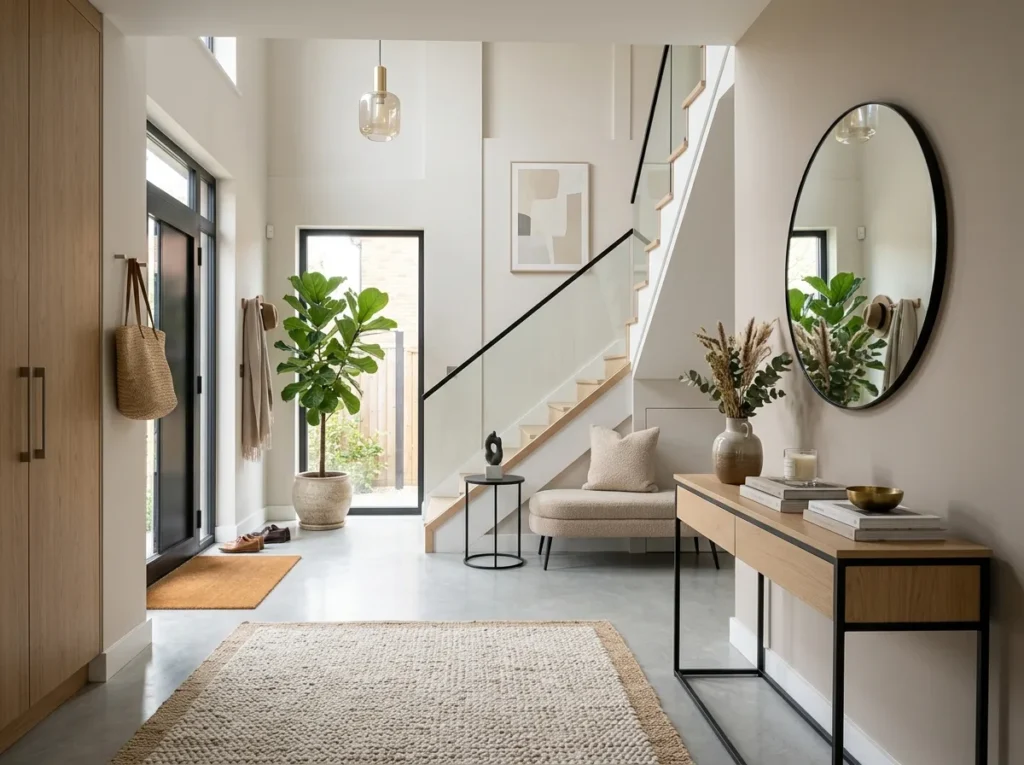
Neutral Color Palettes Work Best in Small Foyers
Soft white, warm cream, oat, and light greige tones make a small entryway feel larger and more open. These shades also reflect light well, which matters a great deal in spaces that often have no windows. For those who want a slightly bolder look, a single dark accent wall in a deep navy or forest green can add drama without making the space feel closed in.
Step 2: Select Functional Furniture
A foyer needs to do two things at once: look good and serve a real purpose. The furniture you choose must handle both.
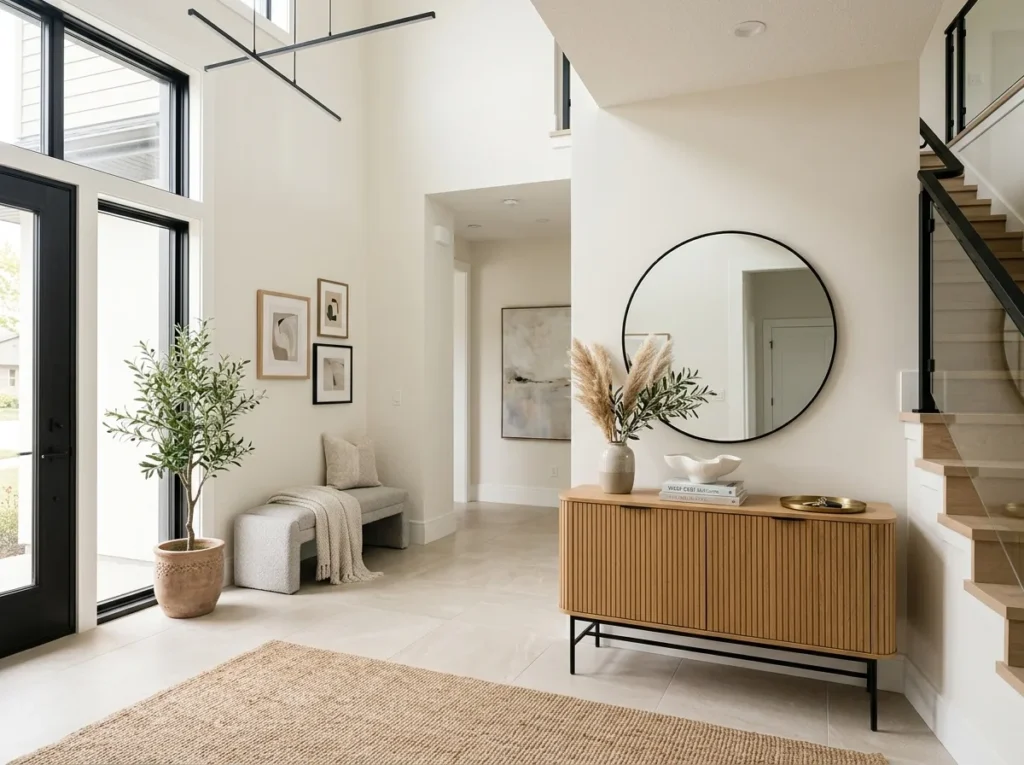
A console table is the most useful piece in any entryway. It gives you a surface for decor, a spot to drop keys, and a visual anchor for the whole space. For a small foyer, look for a table that is no deeper than 12 to 14 inches. Wayfair and IKEA both carry slim console options in the $65 to $130 range that work well in tighter spaces.
An entryway bench serves double duty: it provides seating for putting on shoes and adds a cozy layer to the space. A simple upholstered bench from Target runs around $85 to $110. Place baskets underneath it for shoe storage and the bench immediately becomes both practical and visually interesting.
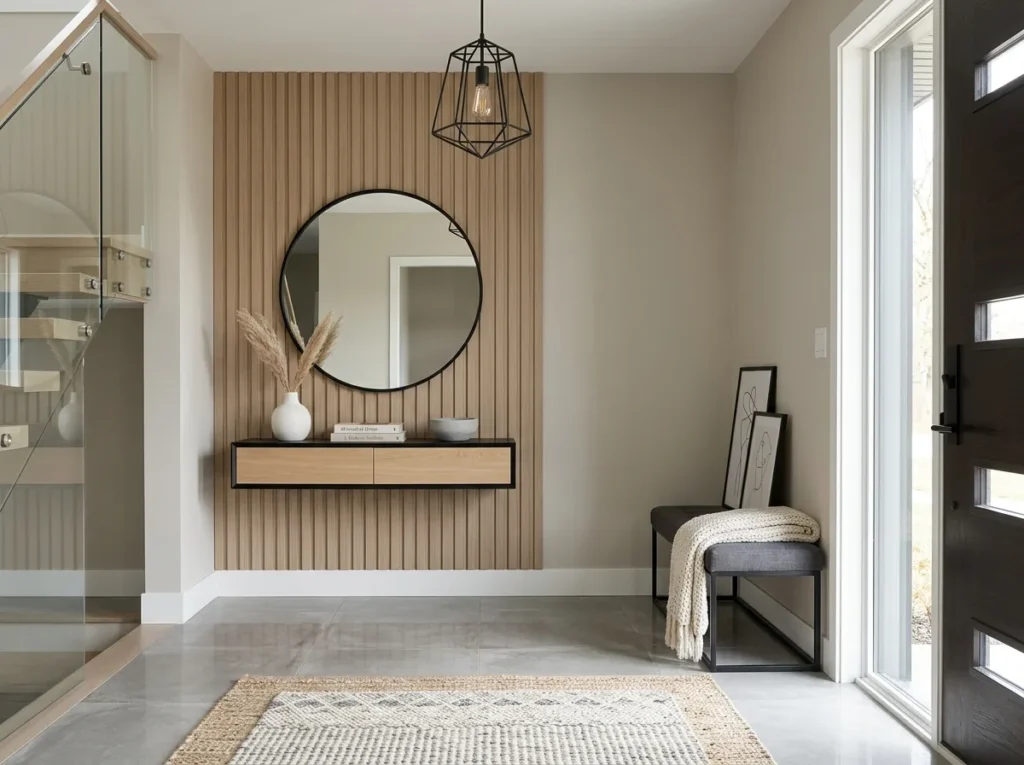
If the space is too small for both a table and a bench, choose the one that solves the bigger daily problem first. In our case, that was the bench, because getting two kids ready and out the door every morning with nowhere to sit was genuinely chaotic.
Budget friendly option: a narrow console table from Facebook Marketplace or the local Goodwill, repainted in a matte white or warm black, looks just as good as a new purchase and costs a fraction of the price.
Step 3: Add Proper Lighting
Overhead lighting in most builder grade homes is not flattering. The brass flush mount fixture in our entryway cast a flat, yellowish light that made the whole space feel dim even when it was on.
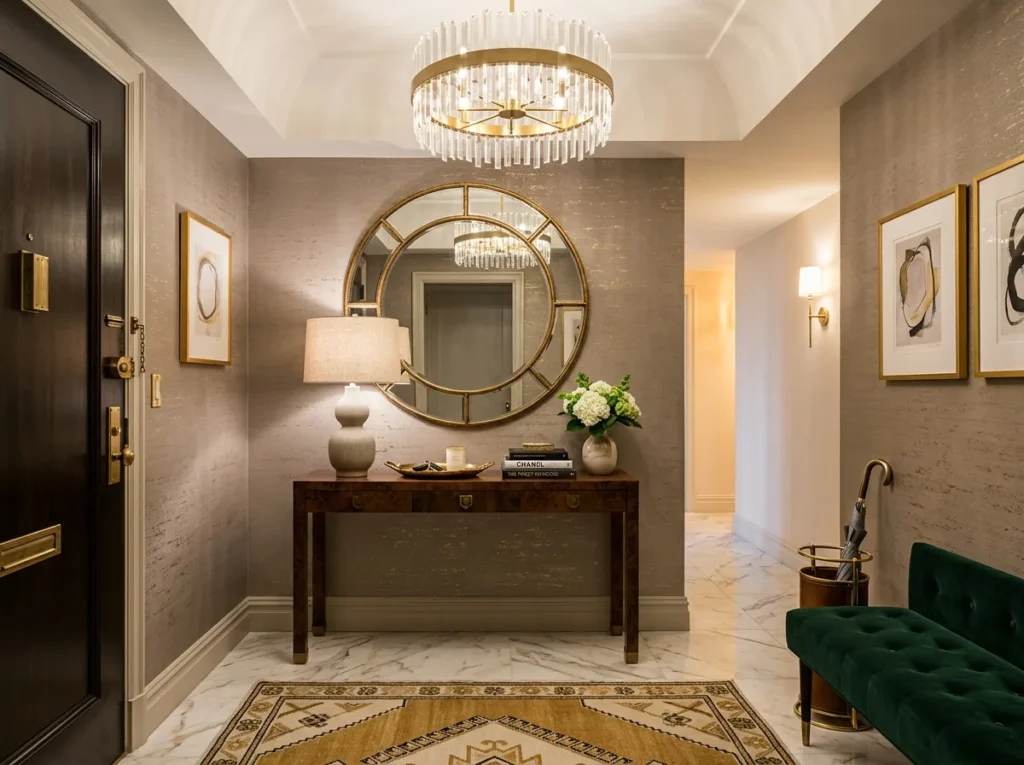
Replacing or updating the overhead fixture makes an immediate difference. A simple drum shade pendant or a brushed nickel semi flush mount from Home Depot or Lowe’s costs between $45 and $120 and installs in about an hour. If changing the fixture is not possible due to renter restrictions, add a plug in wall sconce on either side of the mirror using Command strips that hold the weight. Warm white bulbs in the 2700K range give off a soft, welcoming glow that cool white bulbs at 5000 K simply cannot replicate.
A small table lamp on the console table adds a second layer of light and makes the entryway feel intentional and styled rather than just functional.
Step 4: Decorate the Walls
Empty walls in a foyer make the space feel unfinished. But overcrowding them creates visual noise that works against the welcoming feeling you are trying to build.
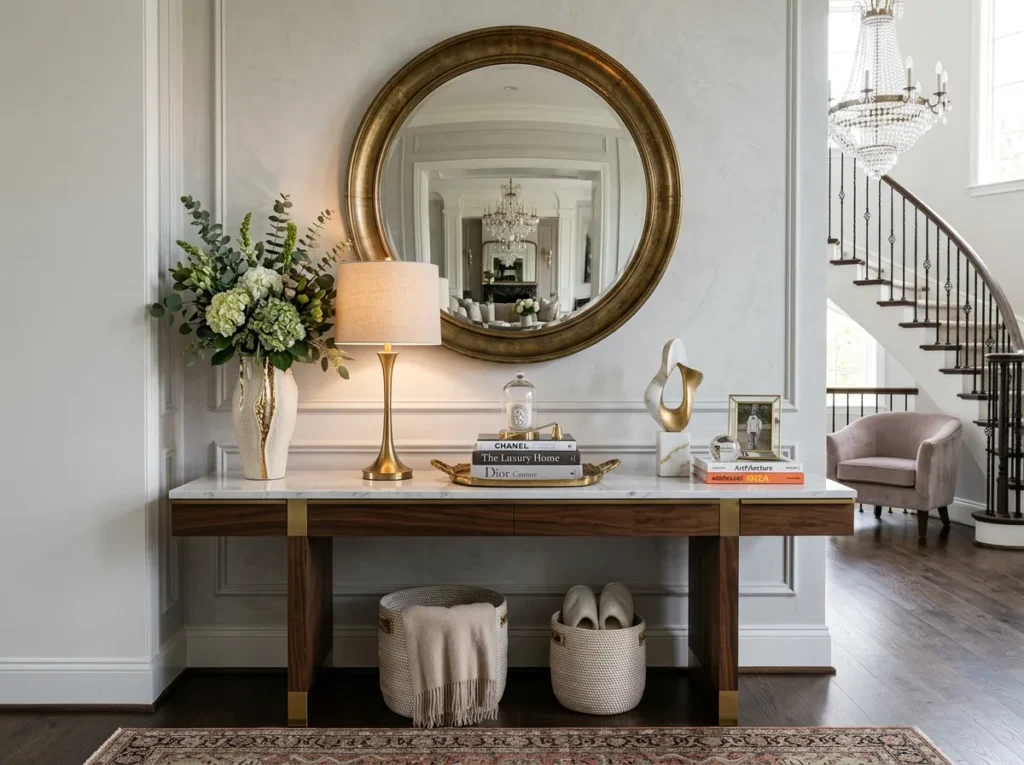
A large mirror is the single most effective piece of wall decor for any entryway. It reflects light, makes the space look bigger, and adds a polished look with minimal effort. A frameless arch mirror from HomeGoods runs around $95 to $140. A framed round mirror from Target or Amazon is available for $40 to $70 and works just as well in smaller foyers.
A gallery wall above a console table is another strong option. Keep the frames within one or two tones, such as all black or all warm wood, to avoid a cluttered look. Mix sizes and leave a small gap between each frame for a clean, considered arrangement.
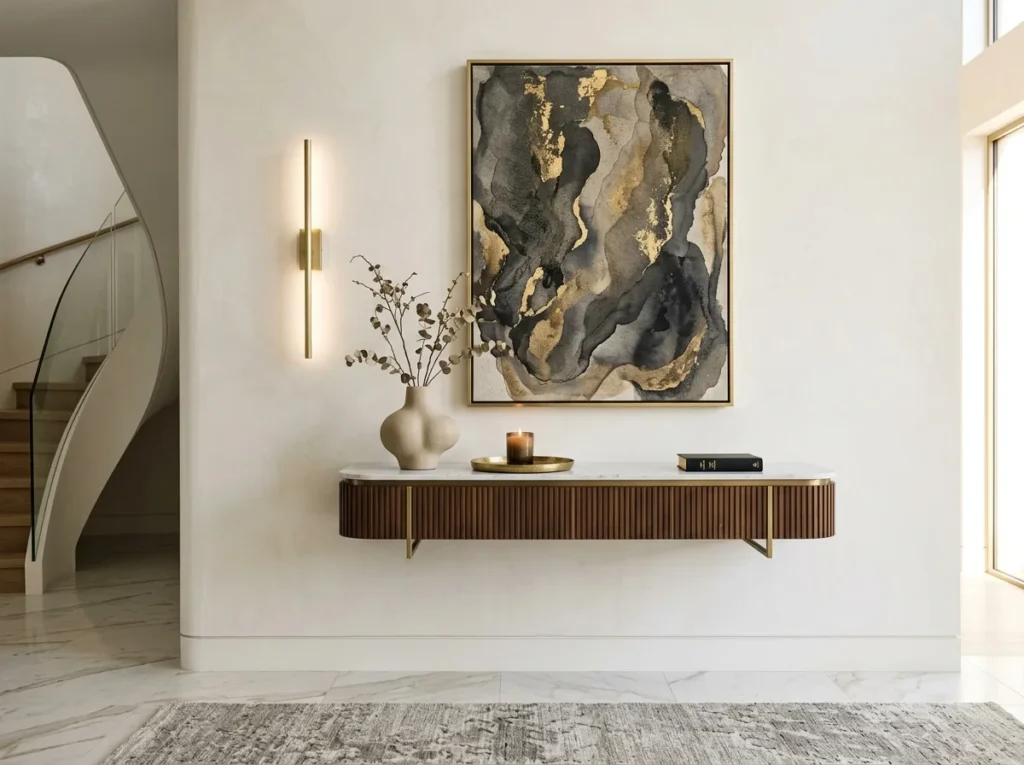
Floating shelves on a side wall add storage and a place for small plants, candles, or books. IKEA floating shelves in the $15 to $25 range mount with minimal tools and hold up well with everyday use.
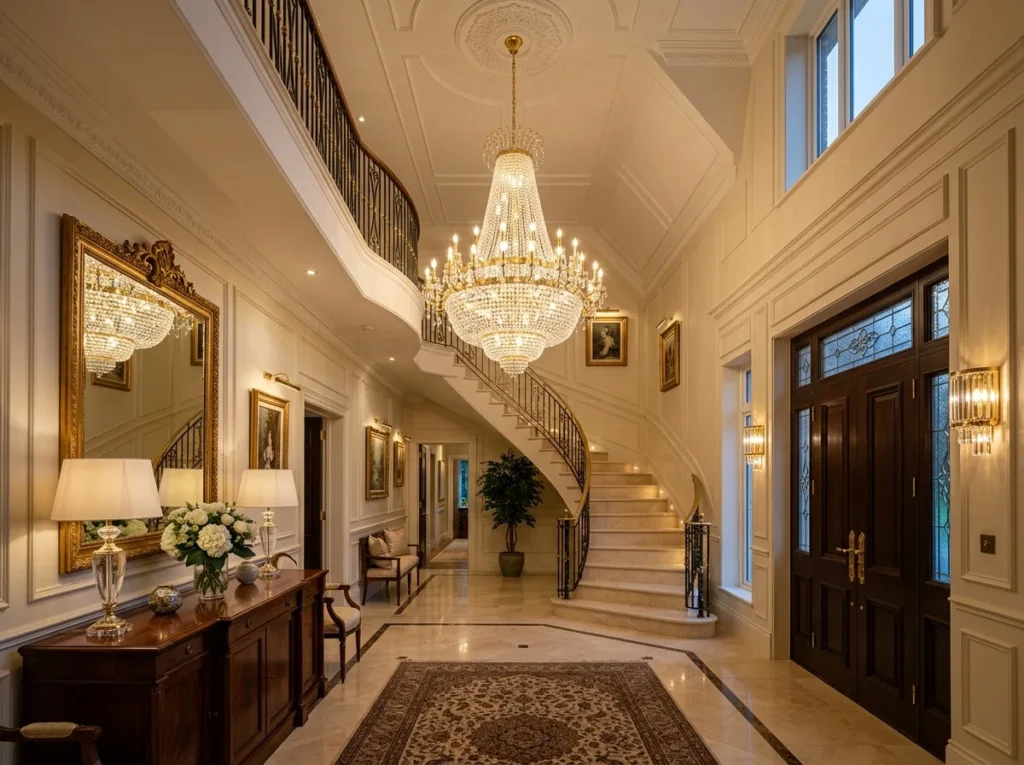
Accent Wall Ideas for the Foyer
A single accent wall in a foyer adds depth without requiring a full repaint. Peel and stick wallpaper is the best option for renters and anyone who wants a reversible update. Geometric patterns, subtle textures, and botanical prints all work well in entryway spaces. Expect to spend $20 to $40 per roll, and always measure the wall carefully before ordering. The first time we tried this in our hallway, we came up one roll short, which meant a second trip to the store and an awkward seam that took weeks to stop being noticeable.
Step 5: Style the Console Table
Table styling is where most people either get it right or overdo it completely. The goal is a surface that looks thoughtfully arranged, not crowded.
Start with a lamp or a tall vase as the anchor piece on one side of the table. Add a decorative tray in the center to hold smaller objects like a candle, a small plant, or a dish for keys. A stack of two or three books on the opposite side adds height variation and a casual, lived in feeling.
Fresh or faux greenery brings life to any console table. A small pothos or trailing ivy in a simple ceramic pot costs $8 to $14 at Home Depot and requires almost no maintenance. For those who prefer low maintenance options, high quality faux stems from Michaels or World Market look very convincing and last for years.
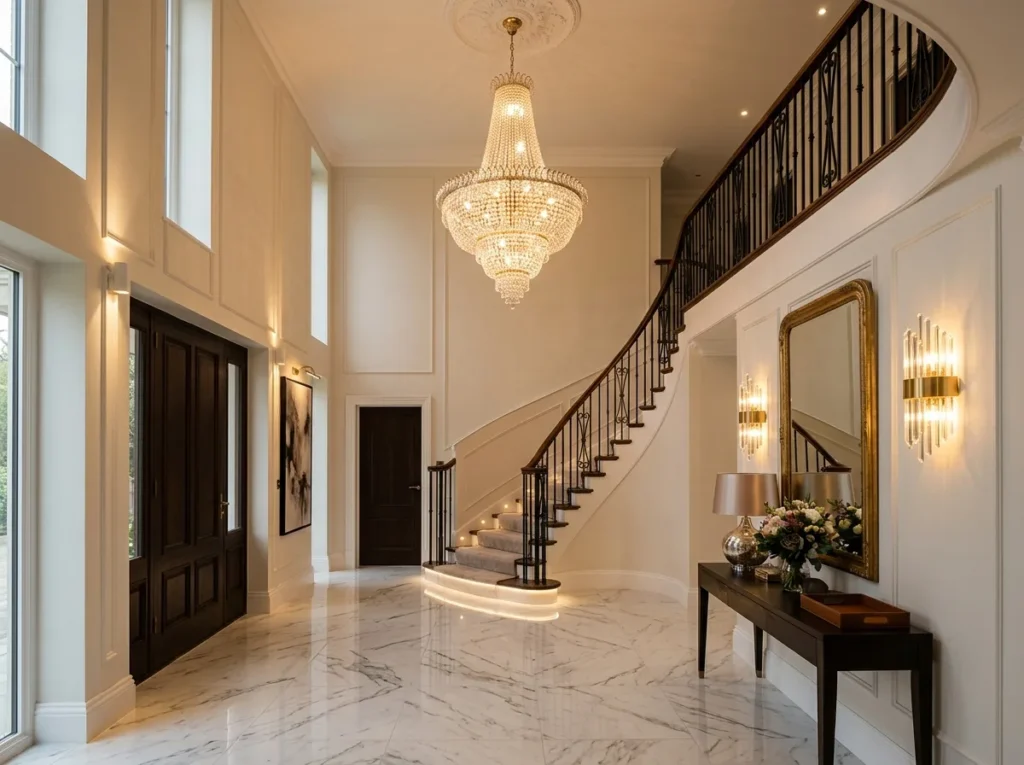
Seasonal styling on the console table keeps the foyer feeling current throughout the year. Swap in small pumpkins and dried grasses in fall, evergreen branches and simple candles in winter, and fresh tulips or small bud vases in spring.
Step 6: Add Storage Solutions
A foyer that has no storage plan will always look messy, regardless of how well everything else is styled. Storage is not optional in a working entryway.
Wall hooks are the most space efficient storage solution available. A set of five matte black hooks from Amazon or Home Depot runs about $22 to $35 and mounts in minutes. These handle coats, bags, hats, and dog leashes without taking up any floor space.
Baskets under the bench or beside the console table hold shoes, umbrellas, and seasonal accessories. Woven seagrass baskets from HomeGoods in the $14 to $28 range look intentional and keep visible clutter contained.
An over door organizer on the inside of the front door is a good solution for apartments or spaces where wall mounting is not possible. These hold keys, mail, sunglasses, and small everyday items without requiring a single hole in the wall.
Step 7: Personalize the Space
This is the step that turns a well decorated foyer into one that actually feels like home. Personalization does not mean cluttering the space with every meaningful object you own. It means choosing two or three pieces that reflect something real about the people who live there.
A small framed photo on the console table, a piece of art that has personal meaning, or a ceramic object picked up on a trip all add character without adding visual noise. The foyer in our home has a small framed print that our daughter made in first grade, hanging alongside two simple botanical prints. It costs nothing and makes the space genuinely ours.
Scent is also part of personalization. A reed diffuser or a single candle on the console table means the first thing guests notice when they walk in is not just the visual, but also a warm, inviting smell. Keep the scent simple and not overpowering.
Common Foyer Decorating Mistakes to Avoid
Overcrowding is the most frequent mistake. A small foyer filled with too many furniture pieces, too many wall items, and too many objects on every surface ends up feeling more stressful than welcoming. Edit down ruthlessly.
Buying oversized furniture is a close second. A full width bench or a deep console table in a narrow entry blocks movement and makes the space feel smaller than it actually is. Always measure before ordering anything.
Poor lighting ruins otherwise good decor. One overhead fixture pointed straight down creates flat, unflattering light. Add at least one additional warm light source to change the entire feel of the space.
Ignoring storage always leads to clutter creeping back in. No matter how well the space is styled initially, without a real storage system in place, shoes and bags and coats will eventually take over.
Using too many colors in a small space creates visual chaos. Two main tones with one accent is the maximum that works well in most foyers.
Tips to Make Your Foyer Feel More Expensive
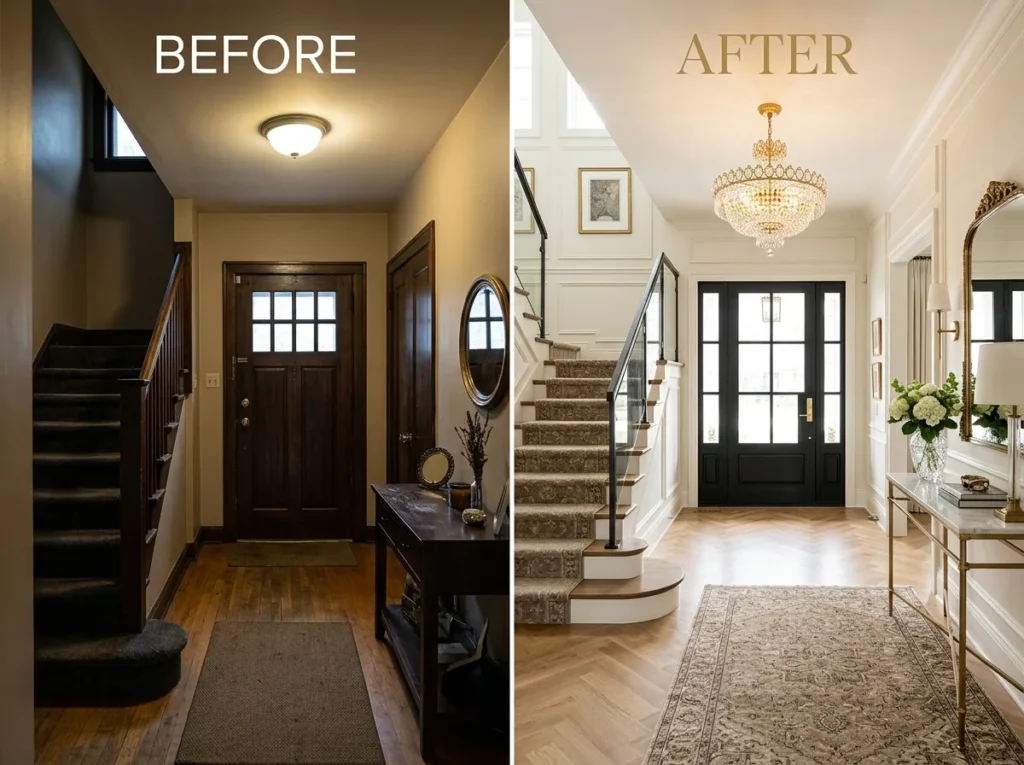
Match your finishes throughout the space. All matte black hardware, or all brushed brass, or all warm wood creates a sense of intention even when the individual pieces come from different stores.
Layer your lighting rather than relying on a single source. The combination of an overhead fixture, a table lamp, and warm accent lighting creates depth that a single bulb cannot replicate.
Keep surfaces mostly clear. Two or three well chosen objects on a console table always read more expensive than a table covered with fifteen smaller items.
Use a large mirror rather than a small one. A mirror that fills most of the wall above the console table looks intentional and adds significant visual space. A small mirror in a large frame often looks proportionally off in an entryway.
Choose a rug or runner with a subtle pattern rather than a solid one. Solid color rugs show every footprint and piece of dirt, while a low pile patterned runner hides daily wear and still looks clean between vacuums. This matters especially in Ohio winters when salt and moisture come in on every pair of boots from November through March.
Your Foyer Sets the Tone for the Whole Home
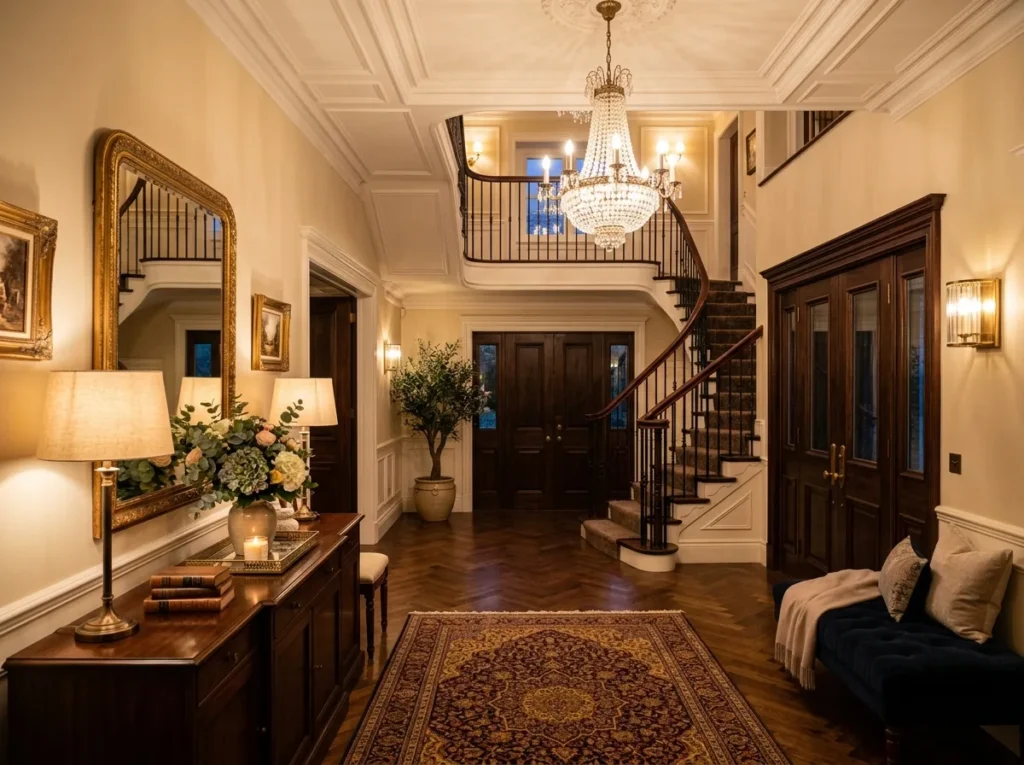
Good foyer decor ideas are not about spending a lot of money. They are about making intentional choices in a small space. A mirror, a console table styled with three well chosen objects, proper warm lighting, and a rug that holds up to daily life will do more for your entryway than any expensive renovation.
Start with the step that solves your biggest current problem, whether that is storage, lighting, or just the bare walls, and build from there. For more ideas on small space styling and entryway organization, explore related posts right here on QuickDecorIdeas.com.

Related Articles
Explore more topics in this category