7 Stunning Boho Home Decor Ideas for a Cozy Stylish Home DIY
Boho home decor ideas had been on my mind for years before I actually tried them. I loved the look in photos, but I always worried it would make our 1,400-square-foot home feel messy instead of cozy.
Our house outside Charlotte has late-1990s builder finishes oak trim, brass fixtures, and a pretty standard layout so it never felt like an easy match for boho style. I leaned more toward modern farmhouse, so adding rattan, macrame, and layered textures felt like a big leap.
But eventually the living room started to feel too plain and flat. That’s when I decided to slowly test boho pieces one at a time instead of changing everything at once. Some choices worked beautifully, others didnt but that’s exactly how the real transformation began.
What Bohemian Style Actually Means in a Real Home
Bohemian style gets misread a lot. Most people think it means maximalist every surface covered, ten plants, fringe on everything. But the version that actually works in a lived-in house is more relaxed than that.
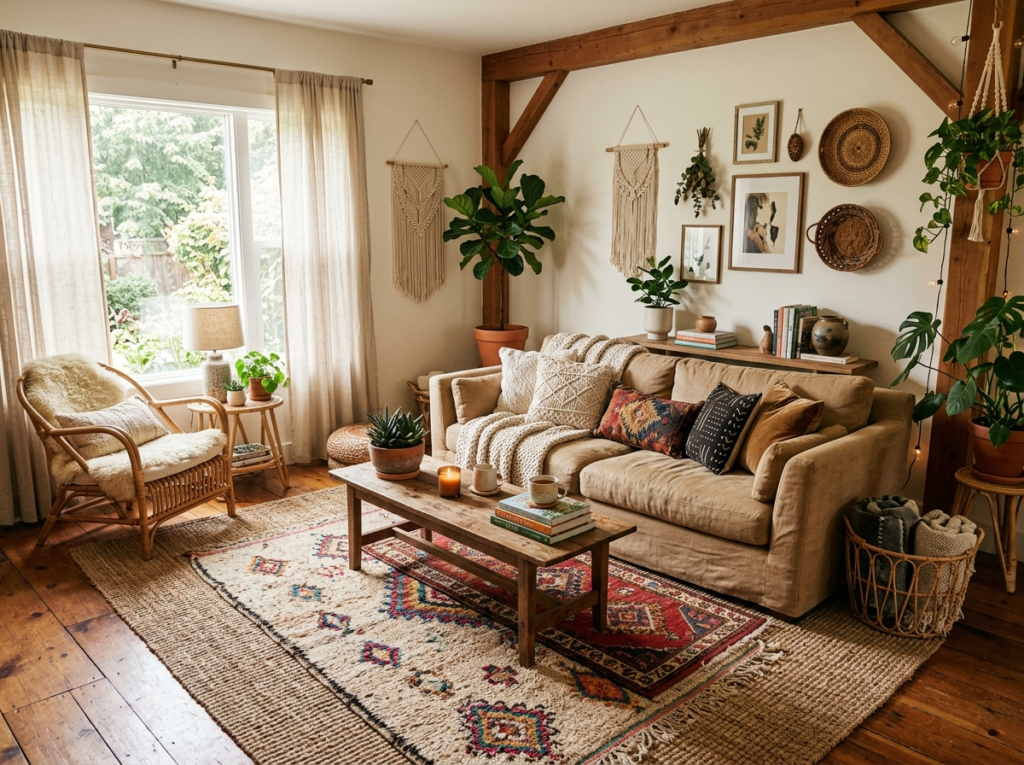
At its core, boho interior design is about natural materials, warm earthy tones, and layered textures that feel collected rather than coordinated. Think woven cotton, raw wood, terracotta clay, linen, and jute sitting together in a room that doesn’t look like it came from one store.
The other defining piece is mixing old and new. A vintage rug under a modern sofa. A cane cabinet beside a simple Ikea shelf. That contrast is what gives a boho room its personality. Rooms that look too “matching” never quite pull off the look.
Color-wise, the palette that works best is earthy and warm: cream, beige, warm white, rust, terracotta, olive green, and soft brown. These tones sit together without fighting, which is why a boho room can have a lot going on visually and still feel calm.
Where I Started: The Living Room
The first real change I made was swapping our solid gray area rug for a layered setup. I put down a large neutral jute rug from World Market (around $110 for an 8×10) and layered a smaller vintage-style Persian rug on top, picked up on Facebook Marketplace for $38. The combination immediately added warmth and depth that the single gray rug never had.
That’s when I understood what people mean by texture layering. It’s not about adding more stuff. It’s about adding different surfaces that catch light differently and feel distinct underfoot.
What Went Wrong the First Time
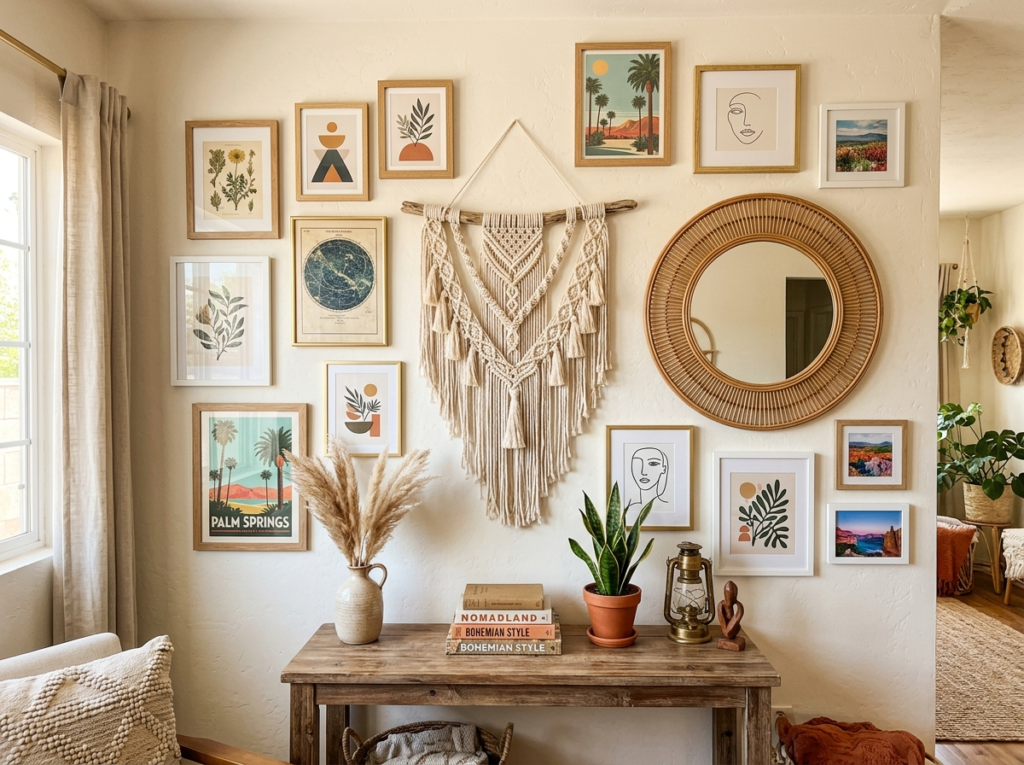
My first attempt at a boho gallery wall was a disaster. I bought four framed botanical prints, a round mirror, and a small macrame wall hanging from a seller on Etsy (about $44). Put them all up in an afternoon.
The problem: everything was roughly the same size and I hung them in a perfectly symmetrical grid. It looked like a hotel hallway, not a relaxed boho space. Took it all down, patched the holes, and started over with a looser arrangement different frame sizes, different heights, a mix of prints and the macrame off to one side. The second version finally looked intentional rather than stiff.
The patching took longer than expected. Used a small tube of spackling from Home Depot and had to do two coats because I’d used drywall anchors the first time. Lesson learned: plan the layout on the floor before putting a single nail in the wall.
Bringing in Natural Materials
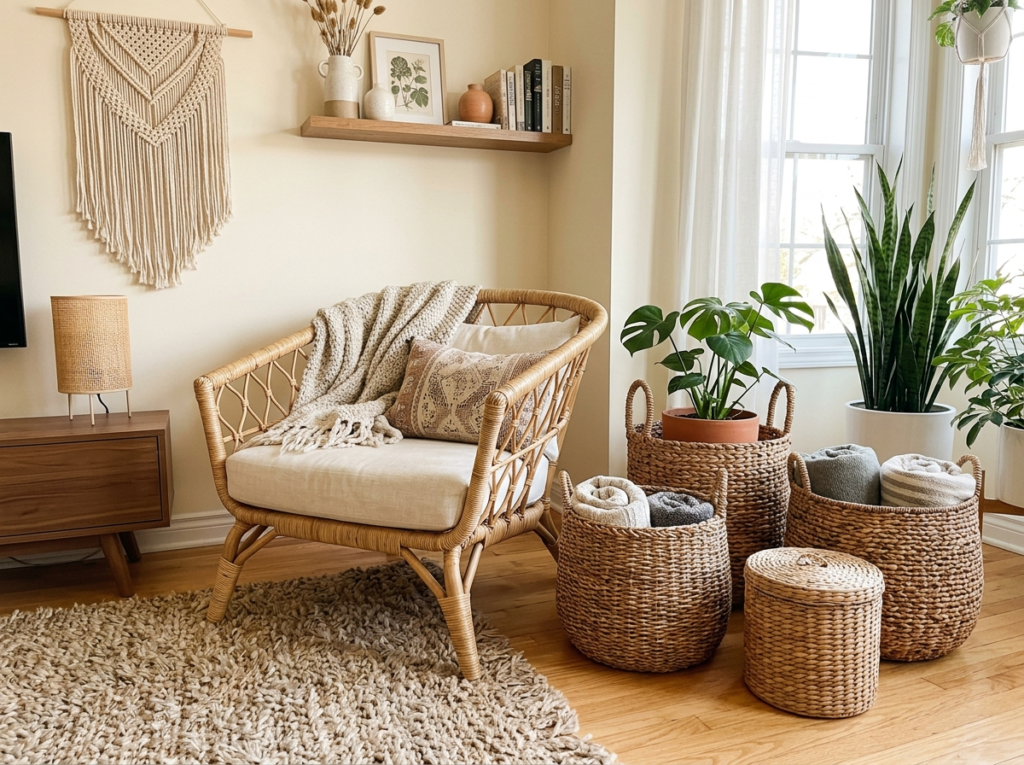
After the living room, I moved to furniture. Rattan and wicker pieces were something I’d always liked in photos but assumed would feel trendy and short-lived. Two years in, I don’t feel that way at all. The rattan accent chair we added in the corner of our living room gets used every single day.
Bought it from World Market for around $165. It’s lighter than upholstered chairs, easy to move, and Biscuit (our dog) has somehow left it alone, which is more than I can say for the linen sofa cushions.
Cane furniture works similarly. A small cane cabinet from Ikea replaced a dark wood end table and immediately made that corner feel airier. The dark piece was making the room feel smaller than it needed to.
For anyone renting or working with a tighter budget, wicker baskets alone can shift the feel of a room significantly. A few large woven baskets from HomeGoods (around $18 to $32 each) replaced our plastic storage bins and changed how the whole living room read.
Plants Made the Biggest Difference
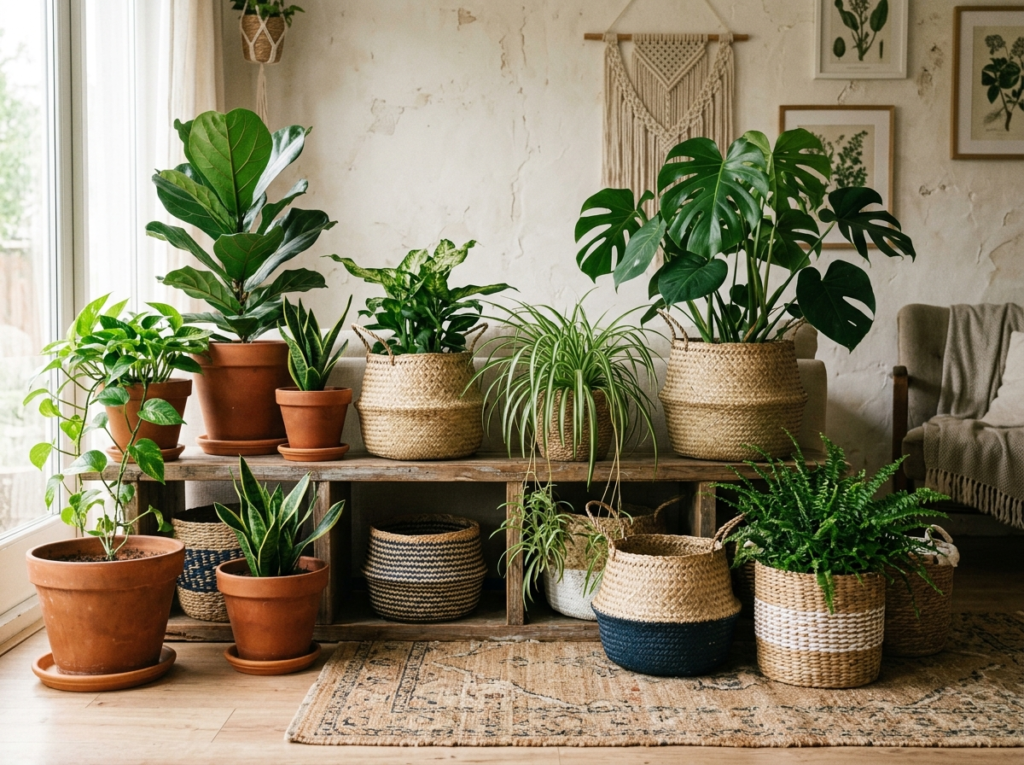
Honestly, nothing moved the needle faster than adding plants. A boho room without greenery just feels incomplete, and I say that as someone who killed three pothos plants before figuring out what I was doing wrong.
The ones that have thrived in our home: pothos, snake plants, and a small fiddle leaf fig that gets the morning light near our east-facing window. The fiddle leaf was $28 from a local garden center. The others I’ve propagated from a single plant I bought years ago for about $12 on Amazon.
For the boho look specifically, the container matters as much as the plant. A plain plastic pot undoes a lot of the warmth you’re trying to build. Terracotta pots are inexpensive and work perfectly. Woven baskets as pot covers (just drop the nursery pot inside) are around $14 to $22 at Target or HomeGoods and look far more expensive than they are.
Hanging planters from the ceiling add vertical interest without taking up floor space. I put two up in the living room using simple hooks just make sure to anchor into a stud or use a ceiling anchor rated for the weight.
The Bedroom: Where Boho Finally Clicked for Me
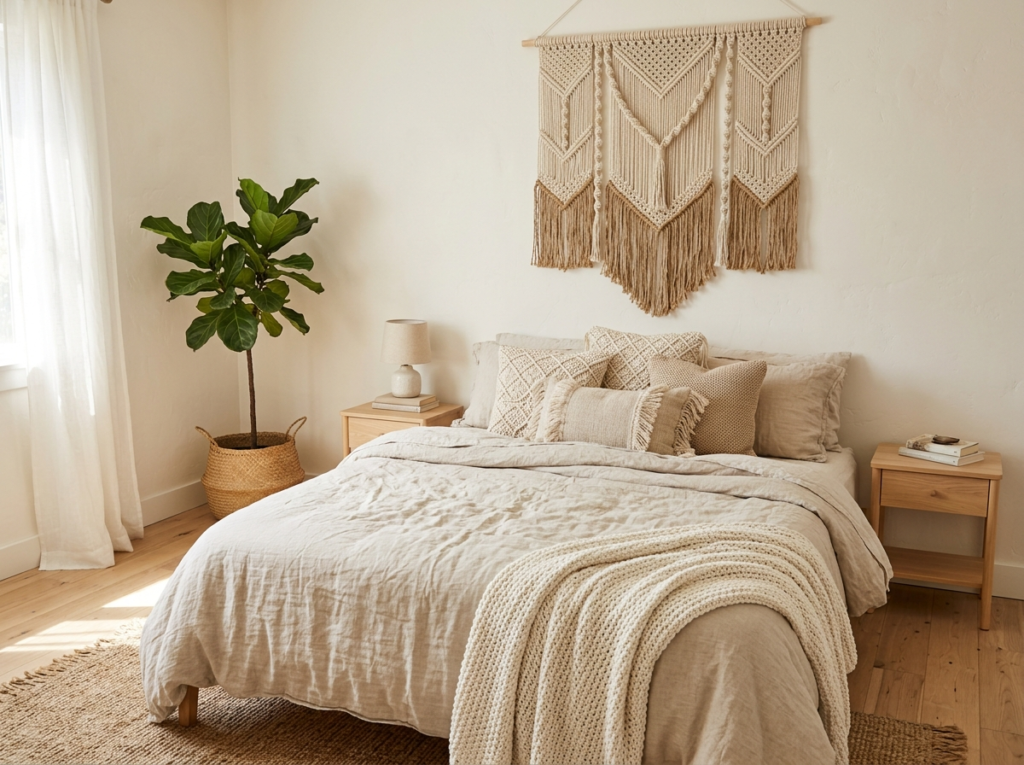
The bedroom is where all of this started making sense as a cohesive look rather than just scattered ideas.
Linen bedding was the turning point. We’d been using a standard cotton duvet and the bed always looked a little flat. Swapped to a linen duvet cover from Quince (around $90 for a queen) and the whole bed immediately had that relaxed, lived-in quality that boho bedrooms are known for. Linen wrinkles, which used to bother me. Now I realize the wrinkles are part of it the room looks intentionally relaxed rather than overly styled.
Layered pillows in natural tones, a chunky knit throw draped at the foot of the bed, and a small woven wall hanging above the headboard completed the look. None of these were expensive individually. The throw was $34 from Target. The wall hanging was $28 on Etsy. The total room update cost us under $200 and felt like a much bigger change.
One caveat: I tried a canopy over the bed first, using a simple fabric panel from Ikea. With our 8-foot ceilings, it felt cramped rather than romantic. If your ceilings are 9 feet or higher, a canopy works beautifully. At 8 feet, skip it.
Lighting Ties Everything Together
This was the last piece I figured out, and it made a bigger difference than I expected.
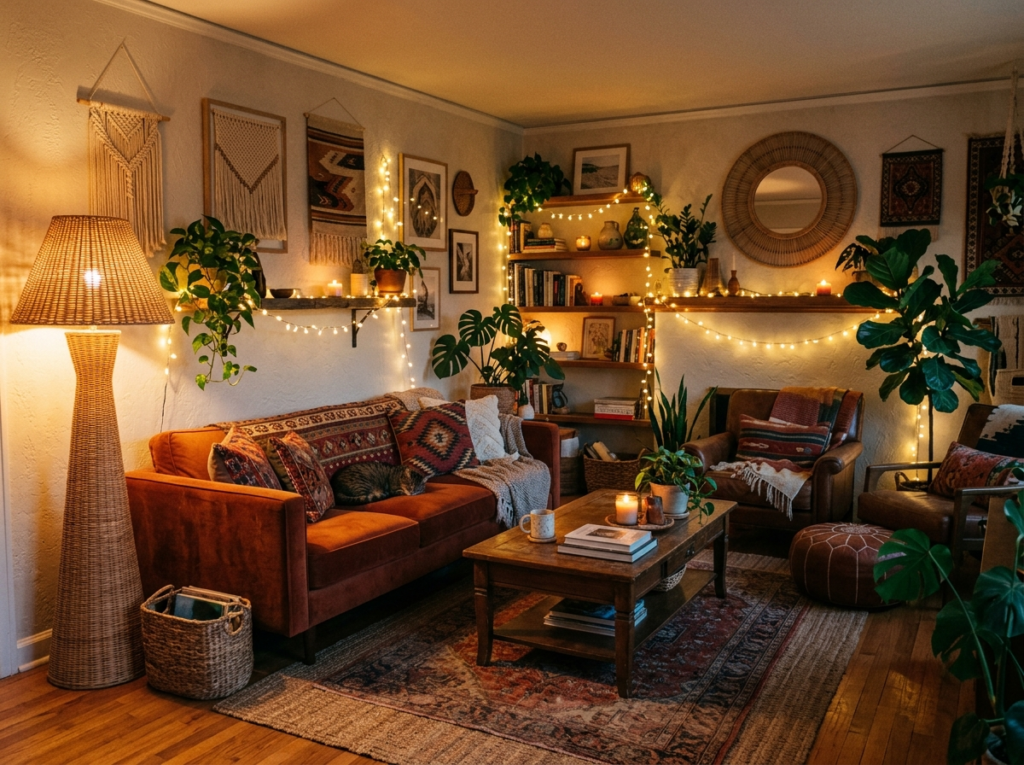
Our builder-grade overhead light fixtures put out a harsh, flat light. That kind of lighting works against a boho space because it removes shadow and depth, which is exactly what gives textured rooms their warmth. Swapping to warm bulbs (2700 K) made an immediate difference. A pack of six from Lowe’s runs about $14 and takes ten minutes to install.
Beyond that, floor lamps and string lights do a lot of the heavy lifting in a boho room. A rattan floor lamp in the corner of our living room (around $85 from Wayfair) casts a warm pool of light that makes the whole room feel softer in the evenings. String lights draped along the top of an open shelf add ambient glow without feeling juvenile.
Lanterns with LED candles are another low-commitment option. A set of two woven lanterns from HomeGoods for about $27 sits on our coffee table and adds warmth even when they’re not lit.
Boho Decor Mistakes I Made (and Would Skip Now)
The biggest one: buying too many things at once. I ordered a big basket haul, several framed prints, two throws, and a plant stand all in the same week. When everything arrived, nothing worked together the way it had in my head because I hadn’t seen any of it in the actual room yet.
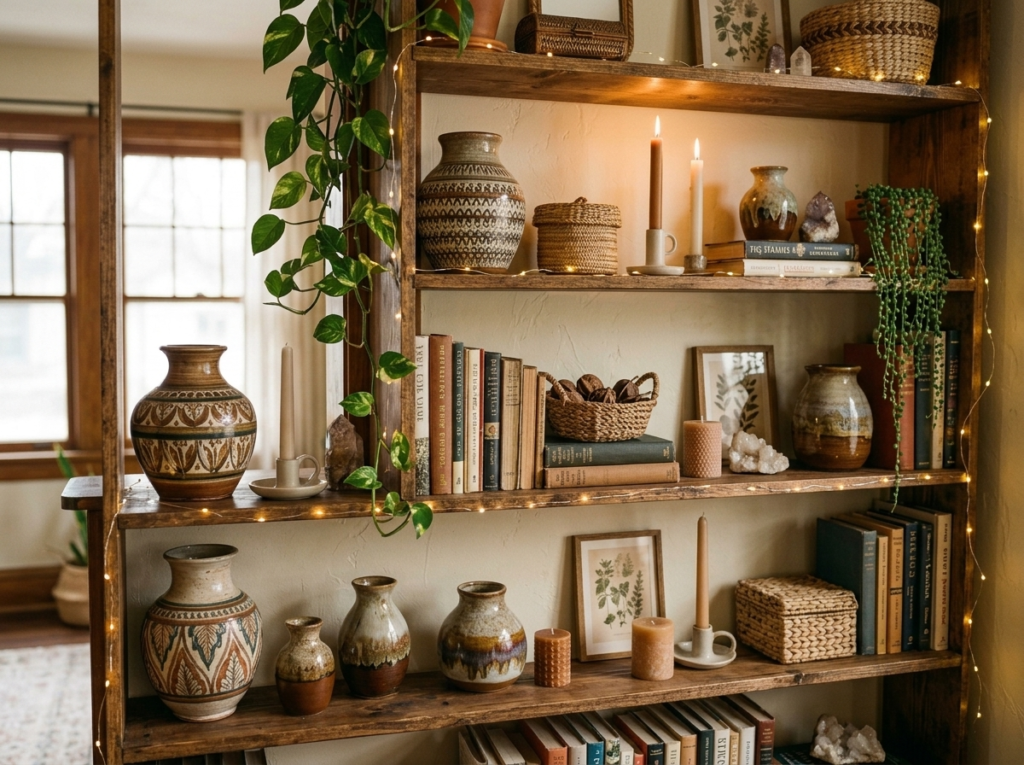
Boho decorating works better when you add slowly. Put one piece in, live with it for a week, then decide what it needs next to it. Rooms styled this way end up looking genuinely collected rather than ordered-in-bulk.
The second mistake was ignoring balance. Boho doesn’t mean every surface gets something. The rooms that look best have clear floor space, breathing room on shelves, and at least one or two walls with nothing on them. Overcrowded rooms look cluttered, not eclectic.
I also leaned too warm early on deep rust throw, dark terracotta pillows, amber lighting all in one room. It started feeling heavy and closed-in. Pulling back to softer creams and pale linens, with the rust as an accent rather than the main note, fixed it.
Easy Ways to Start If You’re Just Getting Started
If overhauling a whole room feels like too much, start with just these:
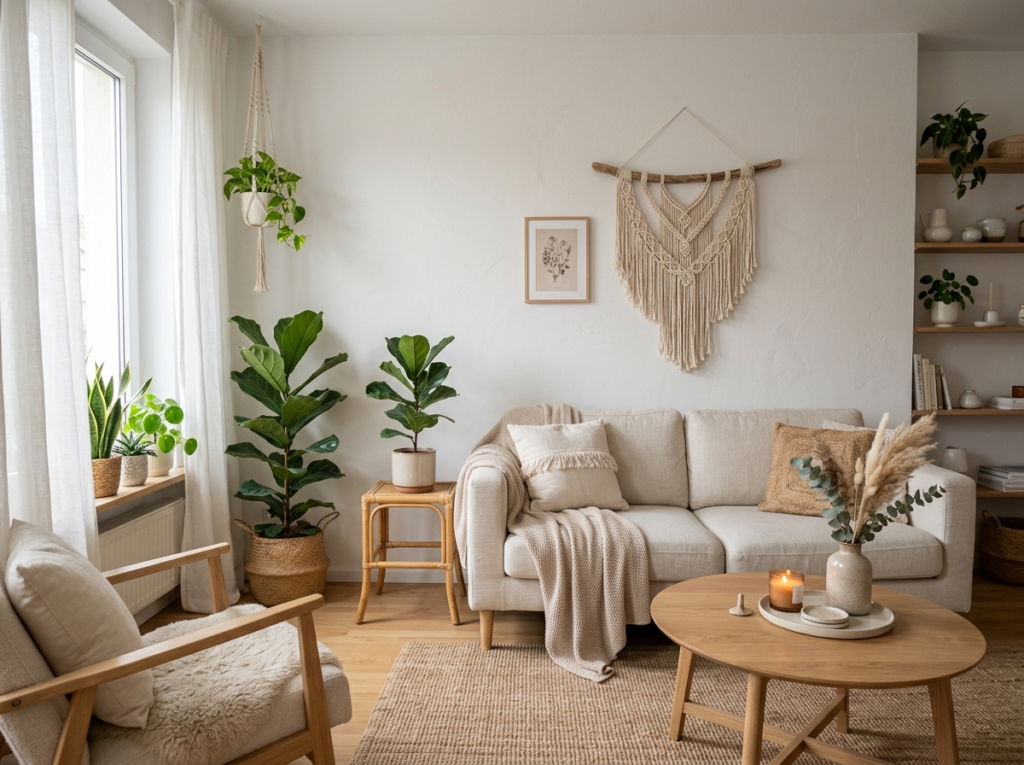
None of these cost more than $30, and together they shift the feel of a room more than most people expect.
- Swap one plastic or metal storage bin for a woven basket
- Add a single terracotta pot to a windowsill
- Replace one throw pillow with a textured neutral one
- Pick up one second-hand piece with natural material: a wicker tray, a wooden bowl, a rattan frame
For small apartments specifically, the key is keeping the palette tight cream, warm white, and one earthy accent color and keeping surfaces relatively clear. Boho decor in a small space works best when it’s minimal and textural rather than layered and busy.
Start with One Corner
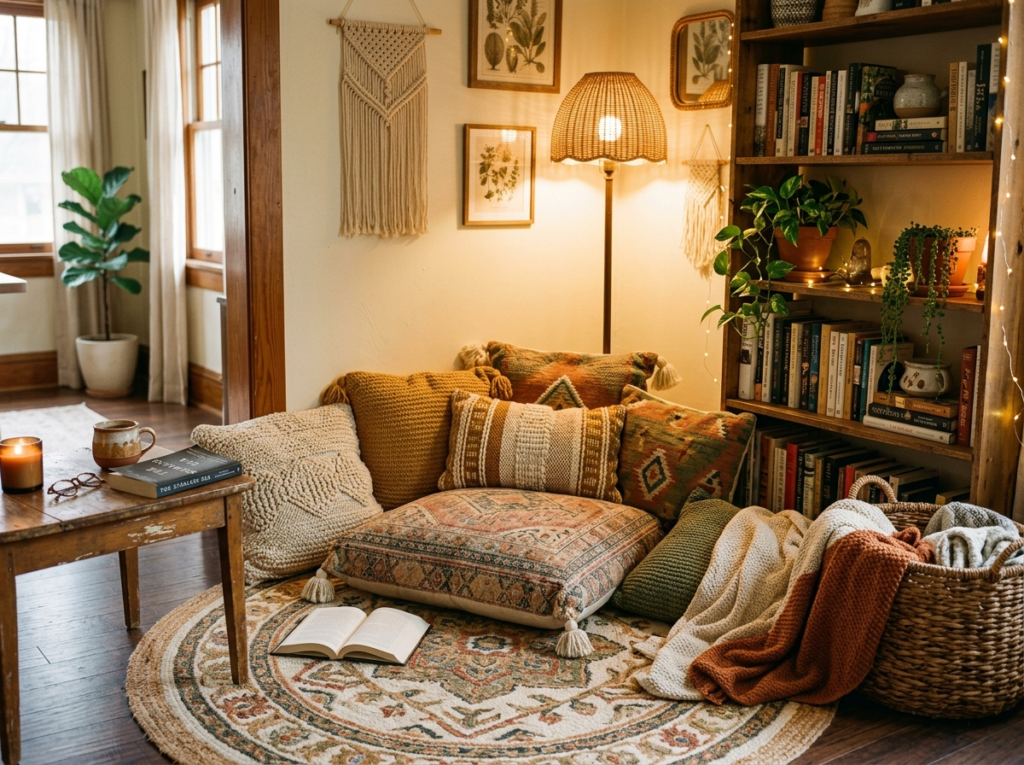
Two years of trying things in our house taught me that boho style isn’t about any single piece. It’s about how a room feels when you’re sitting in it at 7 in the evening with warm light on and the day settling down. That feeling comes from texture, warmth, and a little bit of imperfection things that can’t be ordered in a single cart.
Pick one corner of your home and try it there first. A layered rug, a plant, a woven basket, and a warm lamp. See how it feels. If it pulls you in, keep going. If something feels off, swap one element. That slow, honest process is how the best boho rooms actually come together.

Related Articles
Explore more topics in this category