
15 Wall Painting Ideas to Refresh Your Living Room
15 Wall Painting Ideas to Refresh Your Living Room
A fresh coat of paint is the most cost-effective way to change how your living room looks and feels. Yet choosing the right colours and techniques is harder than most people expect. The wrong shade can make a spacious room feel cramped, and the right living room wall painting ideas can completely transform even the most ordinary space without touching the furniture.
This guide covers everything from trendy two-tone splits and dark moody palettes to timeless neutrals and textured limewash finishes. Whether you are decorating a rented flat or redesigning a family home, these ideas are practical, realistic, and built around how people actually live.

Why the Right Paint Choice Changes Everything in a Living Room
Wall colour is one of the few design decisions that affects every element in a room simultaneously. It changes how furniture appears, how large the space feels, and how much natural light the room seems to have. Getting your living room paint ideas right from the start saves time and money compared to repainting later.
There are three questions worth answering before choosing any colour:
- How much natural light does the room receive throughout the day?
- What is the existing tone of the flooring and furniture?
- What atmosphere do you want the room to create calm and relaxed, bold and dramatic, or bright and social?
Answering these three questions narrows your options considerably and prevents the common mistake of choosing a colour in isolation that looks completely different once it is on the wall.

The Best Living Room Wall Painting Ideas by Style
1. Two-Tone and Split Colour Walls
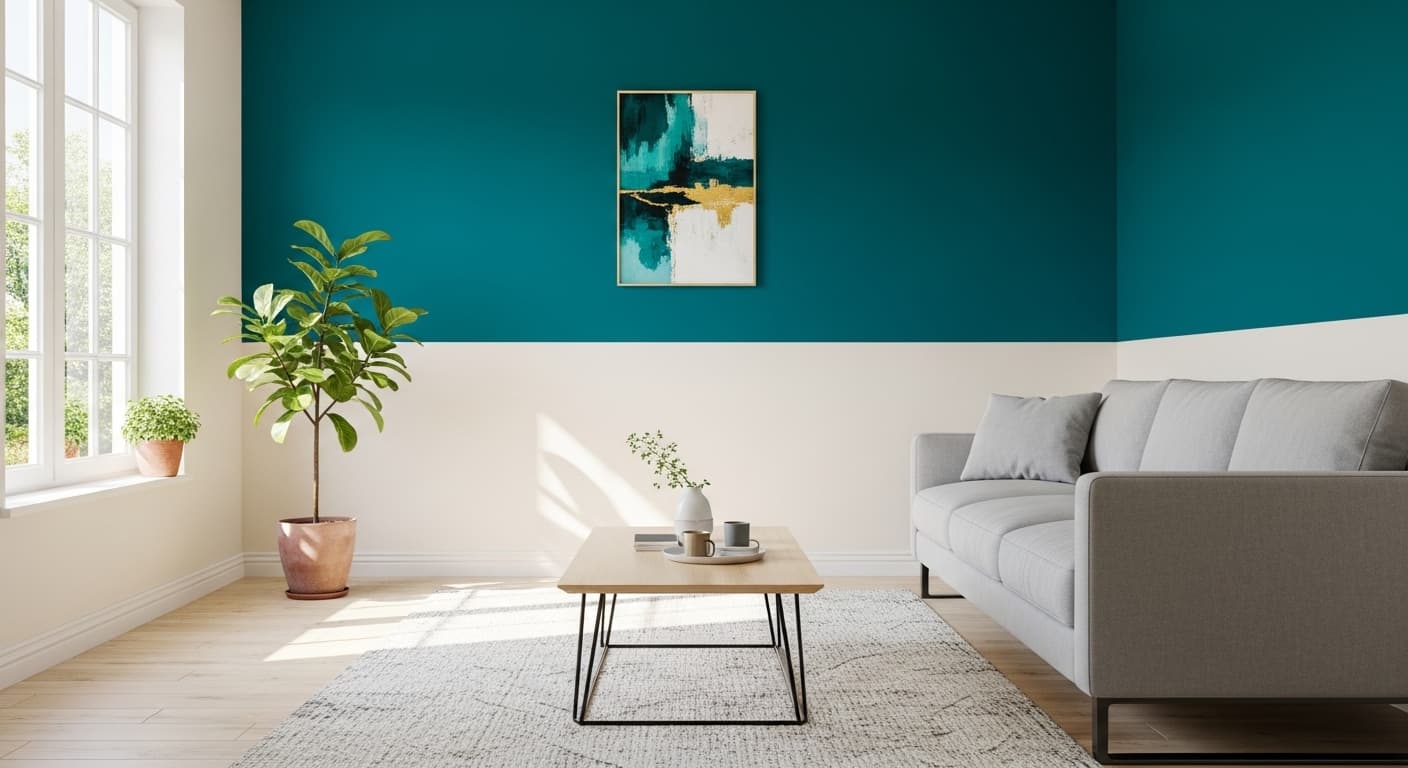
Two-tone painting is one of the most popular living room wall painting ideas in 2026. The technique divides a wall into two colour zones, typically using a horizontal line roughly two-thirds up the wall. The lower section uses a darker or more saturated tone, and the upper section stays lighter or neutral. This adds visual depth and creates an instant architectural feature without structural work.
Popular combinations include dark forest green with off-white, terracotta with warm beige, and navy blue with pale grey. The technique works particularly well in rooms with standard ceiling heights where you want to add character without lowering the visual height of the space.

2. Limewash and Textured Paint Finishes
Limewash paint has moved from boutique interiors into mainstream home decor. The appeal is straightforward: it produces a soft, mottled, naturally aged effect that flat emulsion simply cannot replicate. Rooms painted in limewash look warmer and more layered, and the finish changes appearance depending on light conditions throughout the day.
Brands such as Bauwerk, Portola Paints, and Earthborn all offer quality limewash and clay-based paint products. The application technique matters as much as the colour itself. Limewash is applied in overlapping strokes with a wide brush rather than rolled on, which is what creates the characteristic uneven depth.
For more living room inspiration ideas, visit Quick Decor Ideas for a full range of practical home styling guides.

3. Dark and Moody Accent Walls
Deep, saturated wall colours have been growing steadily for several years and show no sign of slowing down. Colours like deep charcoal, ink blue, forest green, and burgundy used on a single accent wall create a focal point that anchors the room and makes furniture stand out rather than blend in.

The key to making a dark accent wall work is contrast. Pair dark walls with lighter flooring, pale or metallic accessories, and adequate lighting. Wall sconces or picture lights placed against a dark wall dramatically improve the effect by preventing the room from feeling heavy or cave-like.
The Dulux Colour Inspiration Guide is a useful external resource for exploring dark and moody colour palettes for living rooms, with curated paint schemes and room visualiser tools.

4. Pastel Colour Blocking
Colour blocking uses two or more distinct colours in defined geometric sections rather than blending them. In living rooms, this most commonly appears as a single painted panel or rectangle on one wall, creating the effect of a framed feature without requiring any physical frame or shelving.
Pastel tones work particularly well in this format. Soft sage, blush pink, powder blue, and dusty lavender all combine easily with white or off-white on the remaining walls. The result is a room that feels considered and styled without being overwhelming.
Explore more colour blocking and accent wall ideas at Quick Decor Ideas, where you will find practical room-by-room guides for every decorating style.

5. Geometric and Pattern Painting
Painted geometric patterns are one of the most creative living room wall painting ideas for people who want something genuinely distinctive. Common approaches include half-wall diamond grids, horizontal stripe sections, and large-scale triangle panels. All of these are achievable with masking tape, a level, and a steady hand without professional help.
For living rooms, geometric patterns work best on a single wall rather than all four. Choosing one or two tones from your existing colour palette keeps the pattern feeling intentional rather than busy.

6. Ombre and Gradient Effects
An ombre wall transitions gradually from one colour to another, typically from a darker tone at the bottom to a lighter tone at the top. This technique mimics the natural gradient of light in a room and works particularly well in living rooms with high ceilings where the wall area is generous enough to appreciate the gradual shift.
The technique requires some patience and a damp blending brush but is entirely achievable as a DIY project. Choose two tones within the same colour family, such as deep teal fading to pale mint, or burnt orange softening to warm peach.

Quick Comparison: Living Room Wall Painting Ideas at a Glance
Use this table to compare the most popular painting styles by mood, placement, and current trend status.
| Painting Style | Best Wall | Mood Created | Trending In 2026 |
| Two-Tone / Split Colour | Feature / Accent wall | Bold, modern | Yes |
| Limewash / Textured Paint | Any wall | Organic, warm | Yes |
| Dark Moody Tones | Single accent wall | Dramatic, cosy | Yes |
| Pastel Colour Blocking | Corner or niche wall | Calm, playful | Yes |
| Geometric Pattern | Behind sofa or TV | Contemporary | Yes |
| Ombre / Gradient | Large feature wall | Artistic, soft | Growing |
| Classic Neutral | All walls | Clean, timeless | Always popular |
Living Room Colour Schemes That Work in Every Home
Choosing a colour is only half the decision. Understanding how to build a living room colour scheme around it is what makes the difference between a room that looks professionally designed and one that feels incomplete.
A reliable approach is the 60-30-10 rule: 60 percent of the room uses a dominant neutral or base colour (usually walls and large furniture), 30 percent uses a secondary colour (soft furnishings, curtains, rug), and 10 percent uses an accent colour (cushions, artwork, lamps). This proportion works consistently across styles from minimalist to maximalist.
- Neutral base palettes (warm whites, greiges, soft stone) give maximum flexibility for seasonal updates to accessories
- Mid-tone palettes (sage green, terracotta, dusty blue) create atmosphere without committing to bold drama
- Dark base palettes (charcoal, deep navy, forest green) work best with good natural light and pale flooring to balance the weight

Living Room Wall Painting Ideas for Small Rooms
Small living rooms require a more deliberate approach to colour. The instinct to paint everything white or cream is understandable but often produces a flat, clinical result. The following ideas address small spaces more effectively:
- Paint the ceiling and walls the same colour to remove the visual boundary and make the room feel taller and more continuous
- Use a single dark accent wall behind the sofa rather than avoiding dark colours altogether
- Satin or eggshell finishes reflect slightly more light than flat matt, adding brightness without the need for a lighter colour
- A painted arch or curved panel on one wall adds depth and interest without consuming visual space
For small space decorating ideas beyond paint, Quick Decor Ideas covers furniture placement, mirror use, and lighting guides for compact living rooms.
Practical Tips Before You Pick Up a Paintbrush
The paint itself is only part of the equation. How you prepare and apply it determines the final result more than most people expect.
- Always test paint on a A4 or A3 card and stick it to the wall for at least 48 hours before committing, as natural light changes colour significantly from morning to evening
- Use tester pots generously and test in the corner of the room and on the main wall area, not just near a window
- Sand any previously painted or glossy surfaces lightly before applying new paint to ensure adhesion
- Two thin coats always produce a better finish than one thick coat, particularly with feature wall colours
- Quality brushes and rollers make a visible difference to the final result and are worth the additional cost for large walls

Final Thoughts
The best living room wall painting ideas share one quality: they are chosen deliberately rather than by default. Whether you opt for a bold limewash feature wall, a carefully considered two-tone split, or a classic neutral that lets your furniture take centre stage, the most important step is to test, consider, and decide with intention.
Start with a single feature wall if you are uncertain. It is far easier to build confidence from one successful change than to repaint an entire room. Choose a trending finish like limewash or colour blocking for one wall, keep the remaining walls simple, and you will have a room that looks current, considered, and genuinely your own.
Frequently Asked Questions About Living Room Wall Painting Ideas
What are the most popular living room wall painting ideas in 2026?
Two-tone split walls, limewash textured finishes, and dark moody accent walls are the dominant trends in 2026. Pastel colour blocking and geometric painted patterns are also gaining strong popularity, particularly in smaller homes and rented properties.
What colour is best for a small living room?
Contrary to popular advice, small living rooms do not always need white walls. Mid-tone colours like warm sage, soft terracotta, or greige create atmosphere while still feeling open. Painting the ceiling and walls the same colour removes visual boundaries and can make a small room feel more spacious than bright white walls alone.
How do I choose a living room colour scheme?
Use the 60-30-10 rule. Choose a dominant colour for 60 percent of the room (walls and large furniture), a secondary colour for 30 percent (soft furnishings and curtains), and an accent colour for 10 percent (cushions and accessories). This proportion creates balance across most room sizes and decorating styles.
Are dark walls a good idea for a living room?
Yes, when used correctly. A single dark accent wall creates a strong focal point and makes furniture stand out rather than blend in. Pair dark walls with pale flooring, adequate lighting, and light-toned accessories to prevent the room from feeling heavy. Ink blue, forest green, and deep charcoal are reliable choices.